I was met at Cape Town airport by the taxi transfer I had booked in advance, and went straight to the Victoria and Albert City Lodge. It’s being renovated so there was noise of drilling, but I slept anyway after the long travel time.
Next morning, we assembled after breakfast to sign indemnity papers etc and finally meet our travelling companions.
Time to introduce the cast of characters.
First of all, the guides. Swise, the driver is a 6’ tall descendant of the Zulu tribe, unruffled and calm, clearly used to dealing with a bunch of needy clueless tourists.
Tawanda, a Zimbabwean, is shorter than his colleague, but makes up for it with his thickset build. He talked about smiles and he has the perfect example of a broad South African hospitable face, crowned by short dreadlocks.
The Group;
a Welsh couple
a couple of stout German damen
a German couple on their second marriage in slightly later life
a young German couple who are on their honeymoon
a retired English accountant
another retired English man
a single German female
Me
I had already met some of the English speaking people and we quickly realised we were in a minority! My Leaving Cert German would have to be dredged up from the inner recesses of what passes for my brain these days.
Thankfully there were no towels on the seats of the bus and we set out for the southern part of the Cape.
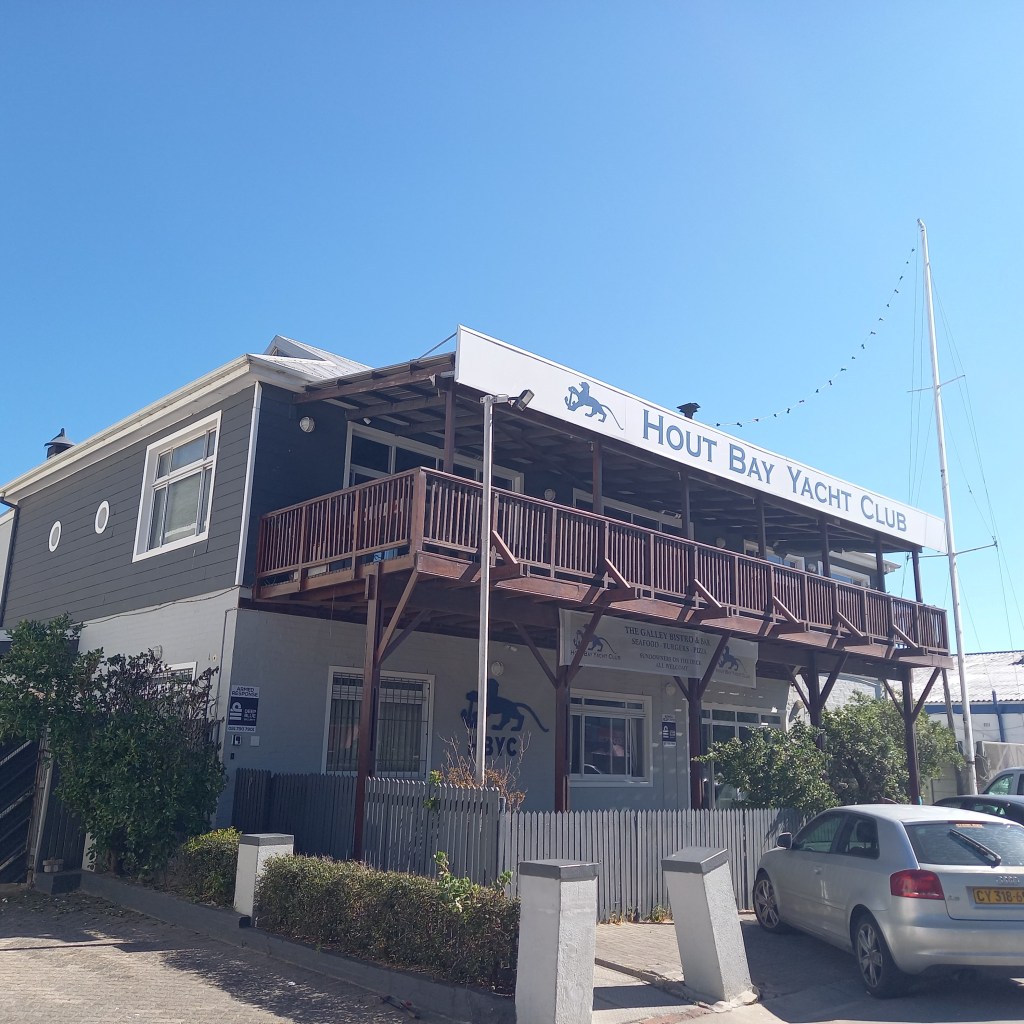
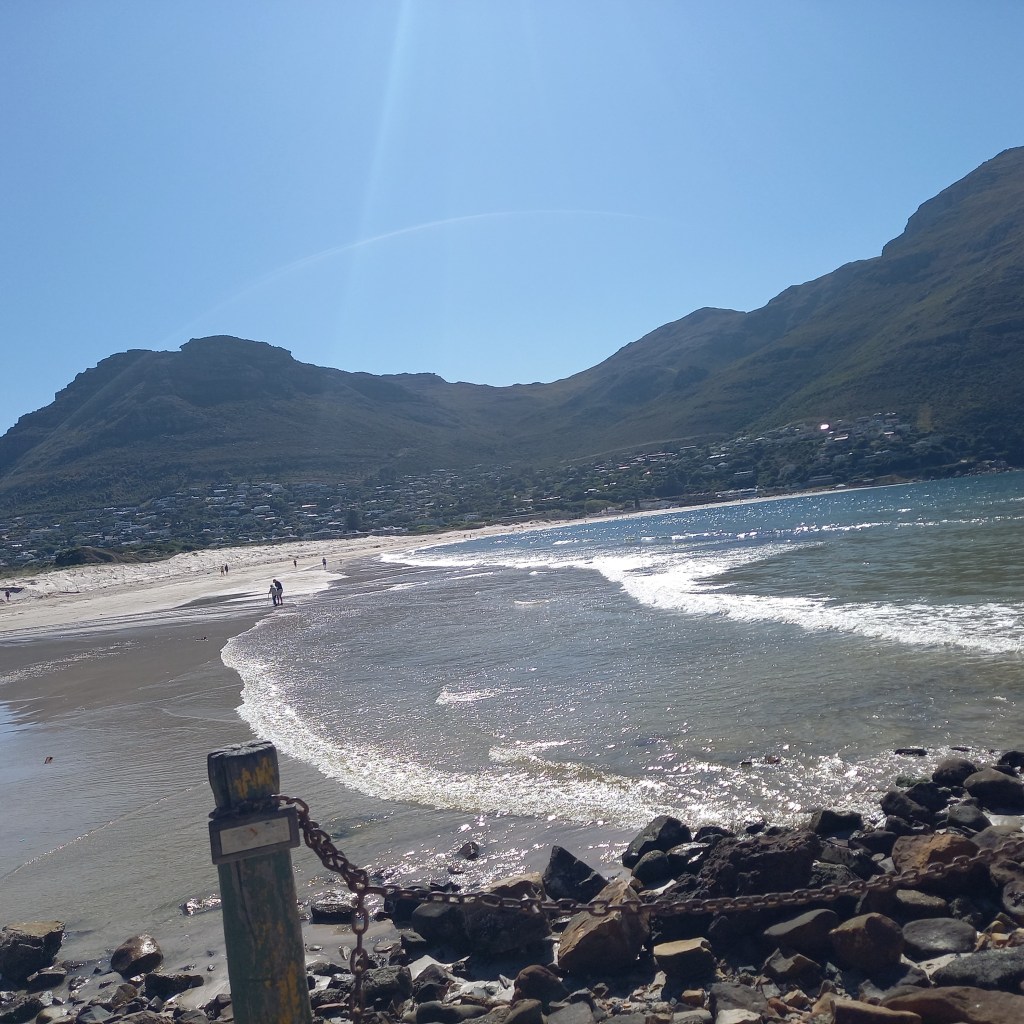
First stop – Hout Bay – used by English ships as a safe harbour.
Also important for the timber that used to surround the area until the settlers cut it down for house and ship building. Manganese was a large part of the trade here at one time. Now it’s mainly cray fishing and we saw the fishing boats in the harbour. There is a fabulous beach there and I took the opportunity to paddle. The whole area is dazzlingly beautiful.
As we drove out of Hout Bay, a shanty town was visible to our right.
Tawanda drew our attention to it, referring to the two sides of South Africa- the poverty beside enormous wealth.
The coastline is dotted with lavish homes taking advantage of the stunning views over the sea.
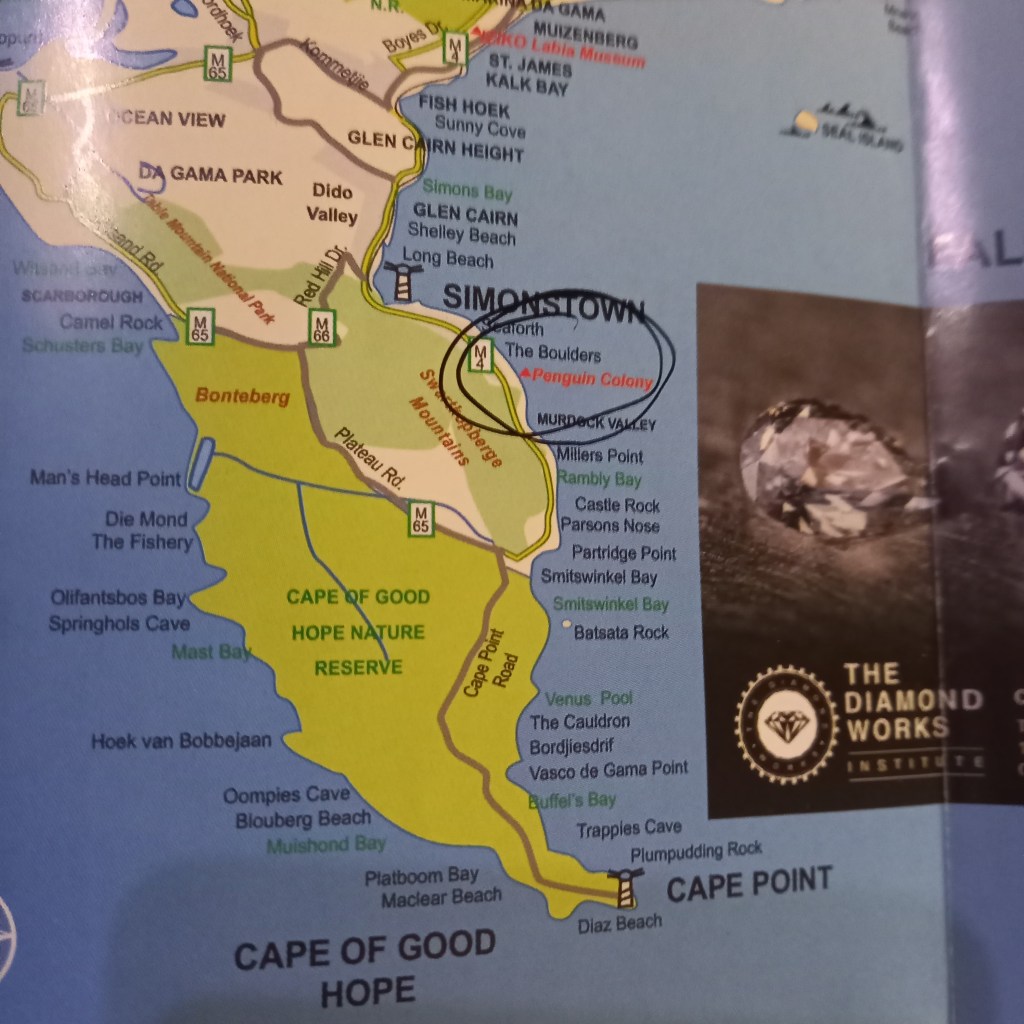
Next to Simonstown to visit the colony of African penguins.
This was cuteness overload. Wooden platforms have been built at either end of the beach to allow viewing, without disturbing these little guys.They have specially built little lairs in the undergrowth on land.
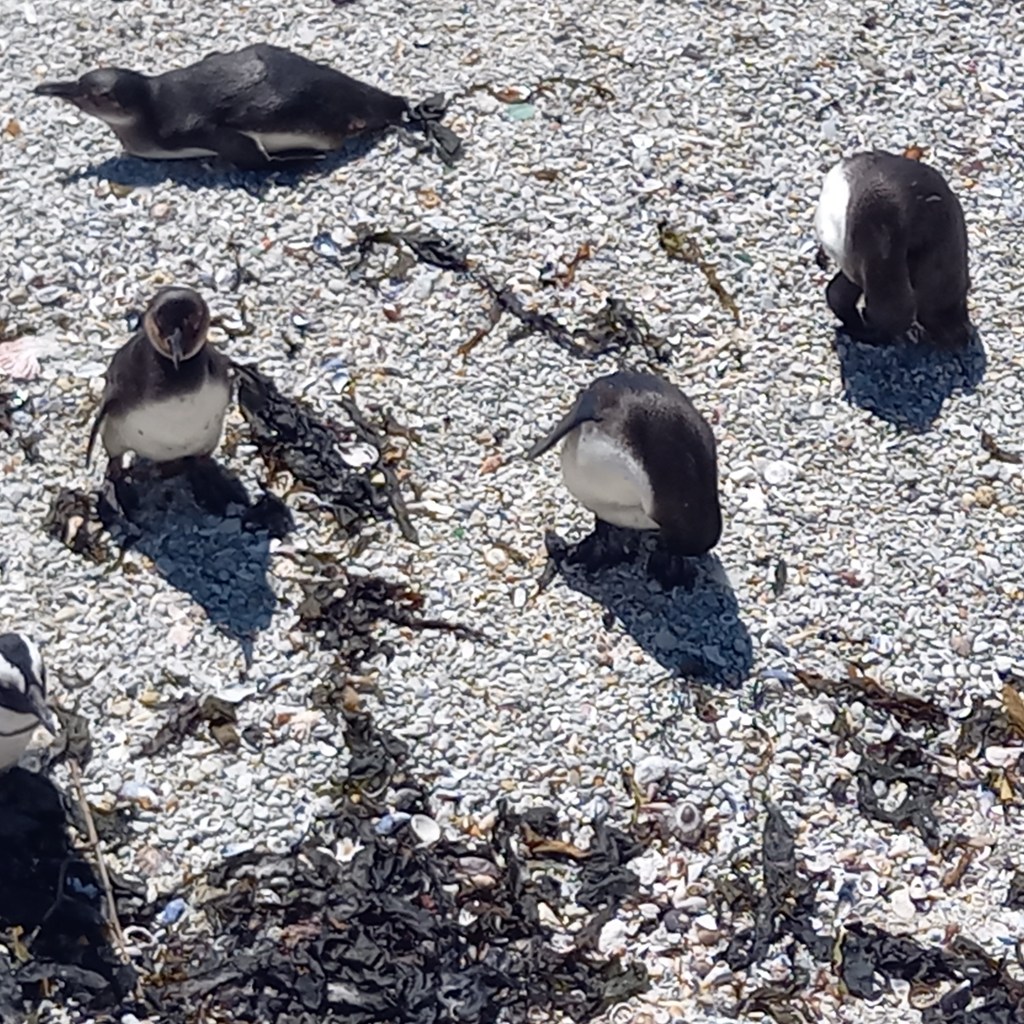
It’s unusual to have penguins in such warm areas.
They have adapted by cooling down via a gland above their eyes that allows them to release the heat of their bodies. They also have bare patches on their faces and hold their little flappers out from their bodies to cool down. They dive to cooler depths to lower their body temperature too, and despite all this, they are an endangered species. This is due to Man’s intervention and the depletion of guana piles that they use for breeding in. Most penguins breed on ice. These guys evolved only 2.4 million years ago, whereas their Antarctic counterparts are around for over 6 million years.
The day was still young and we drove on to the Cape Reserve National Park.
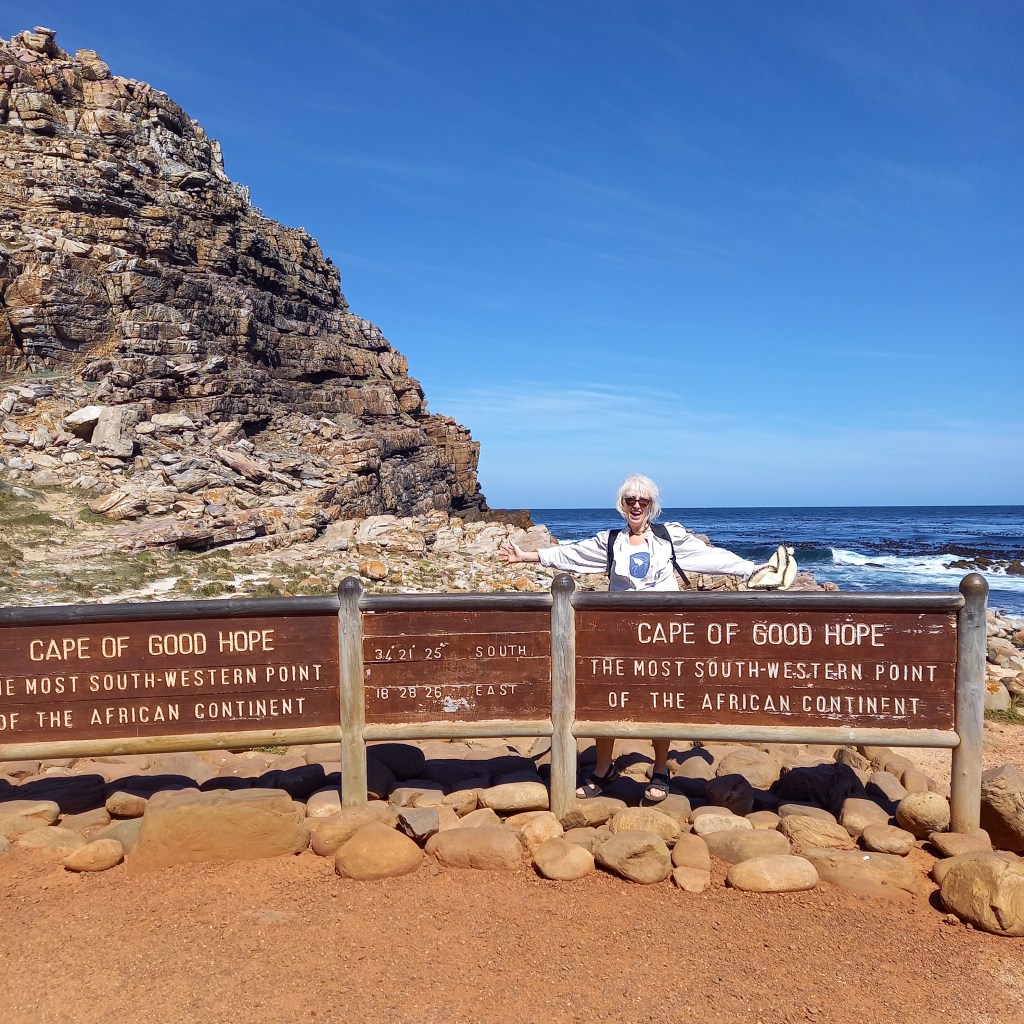
There , we climbed to the summit of Cape Point and down again, grabbed takeaway lunch in the restaurant and tackled the 1.5 hour trek to the Cape of Good Hope.
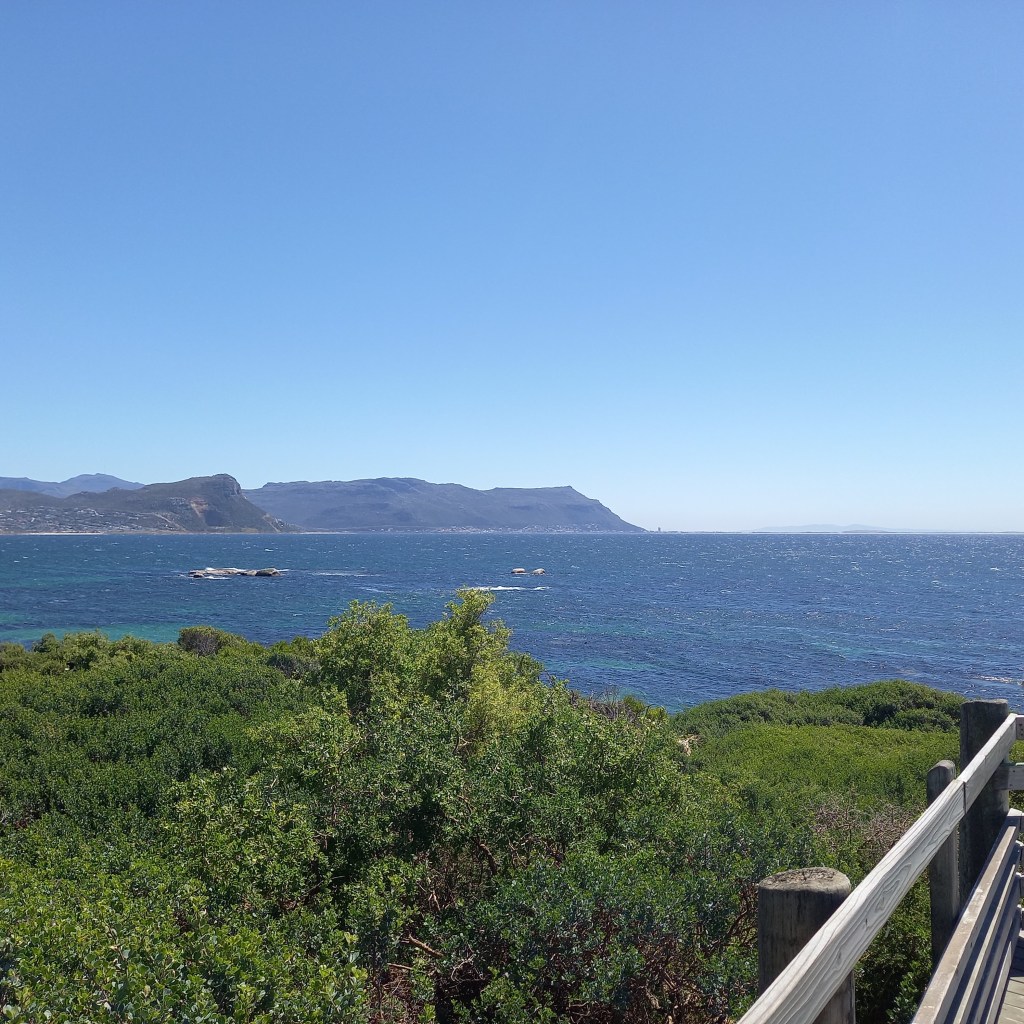
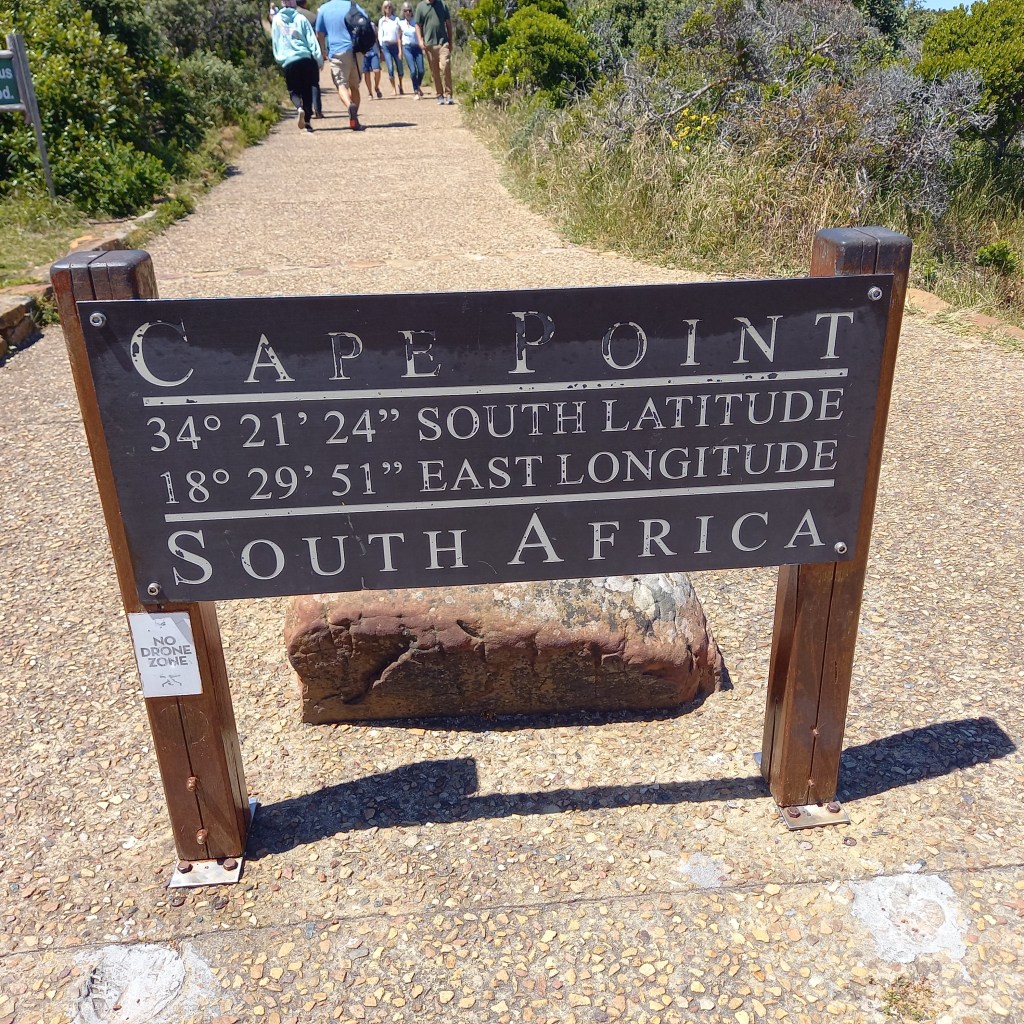
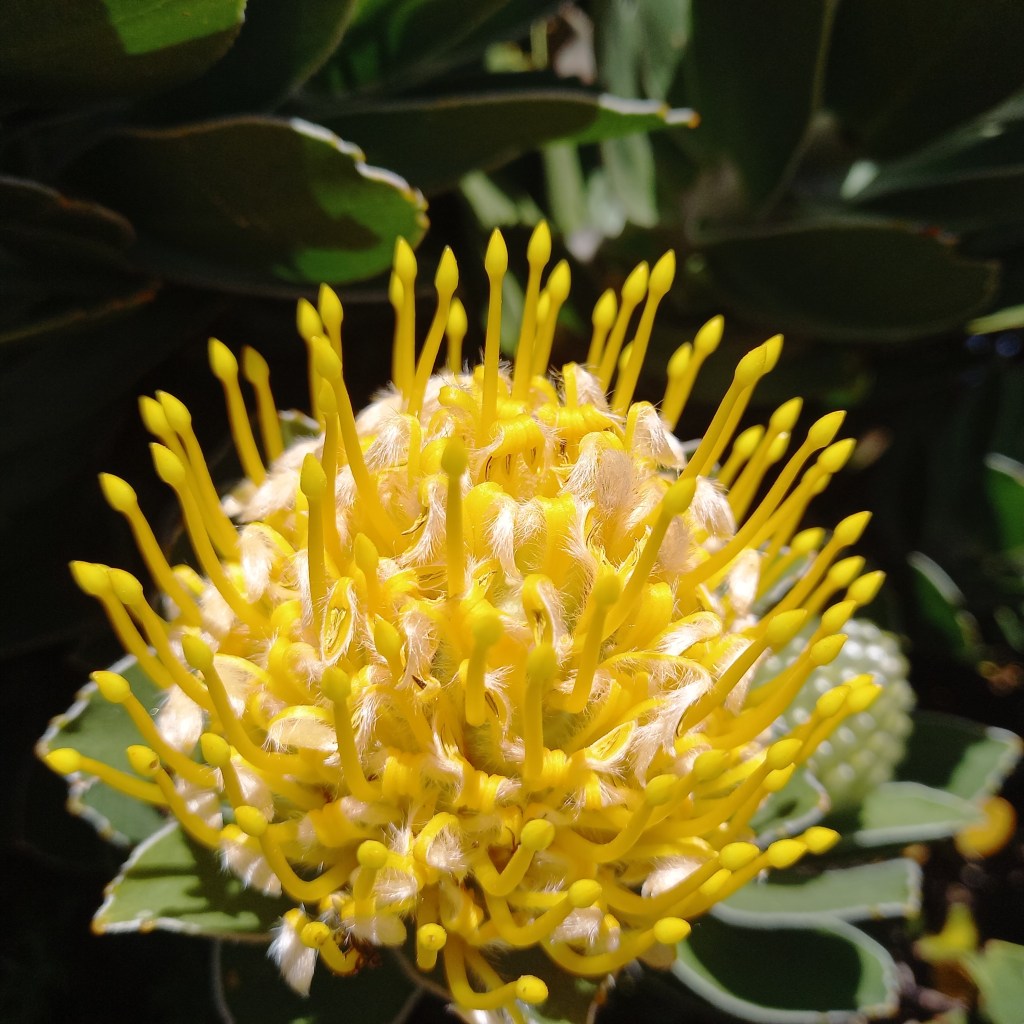
I will let the photos tell their own story. It was breathtaking and quite emotional when I actually got my photo taken at the Cape of Good Hope.
It is a landmark in global sea journeys. I thought about all the explorers who passed by and also those not so lucky who were shipwrecked there, helpless in the face of the wind in the wrong direction, with no engine, GPS or radio to assist them.
We gladly boarded the bus, exhausted, and made our way back to the city.
Next came a flavour of the way our days were to become action packed.
We were given 2 hours to prepare for dinner in a restaurant with a live African band.
We got our first flavour of African fare- kudu, Springbok and ox tongue were among the choices. An accompaniment of african beans, millet and maize was annoption, which was really a meal in itself.
The band was amazing, totally percussion, playing Dave Brubeck’s Take Five on a wooden xylophone with a band of wooden percussion behind him. Fantastic version.
This is a taste of what they played earlier…


Leave a Reply