Blog

  • Day 3 Gariep river

    Day 3 Gariep river

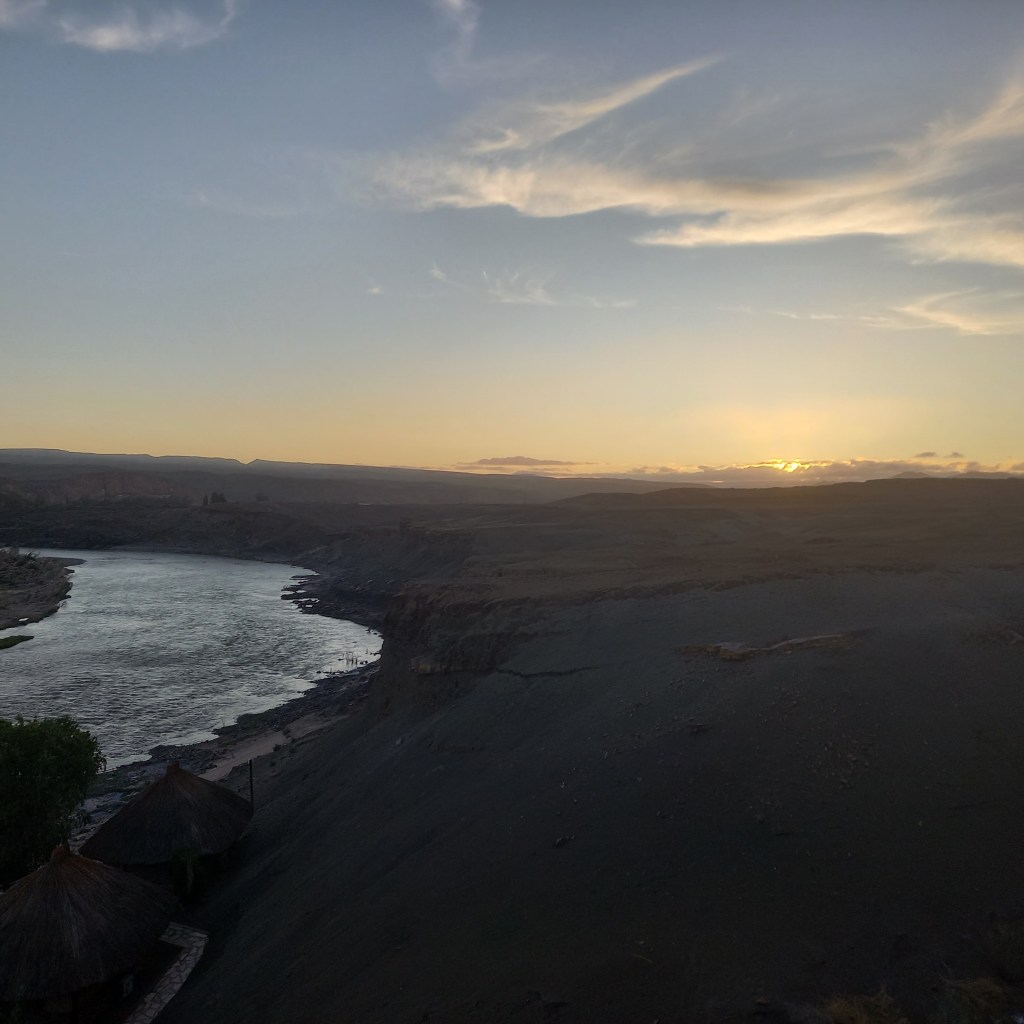
    View from hill behind chalets

    Felix Unite campsite.

    27th October 2023

    Day 3

    the day dawned gradually over the vinyards of Highlanders lodge.

    I made my way up to the swimming pool bar where Raul had coffee on the go at 6.30 am. 

    Pretty soon, the two Rhodesian Ridgebacks made their appearance, the younger one, Geoffrey with a tennis ball in his mouth, covered in slime and drool.

    I still threw it for him , he was so adorable.

    Soon, he was joined by his larger companion, Troy, same breed, but twice his size. They gambolled about( if that’s not a word reserved for lambs) while I attempted to drink the coffee in between it spilling everywhere as they bumped and nudged me to play.

    Breakfast was at 7.15  and the coconut yoghurt went well with fresh fruit, around the now extinguished campfire.

    Swise and Tawanda rallied us after the washing up was done and we left the Cederberg for new pastures. 

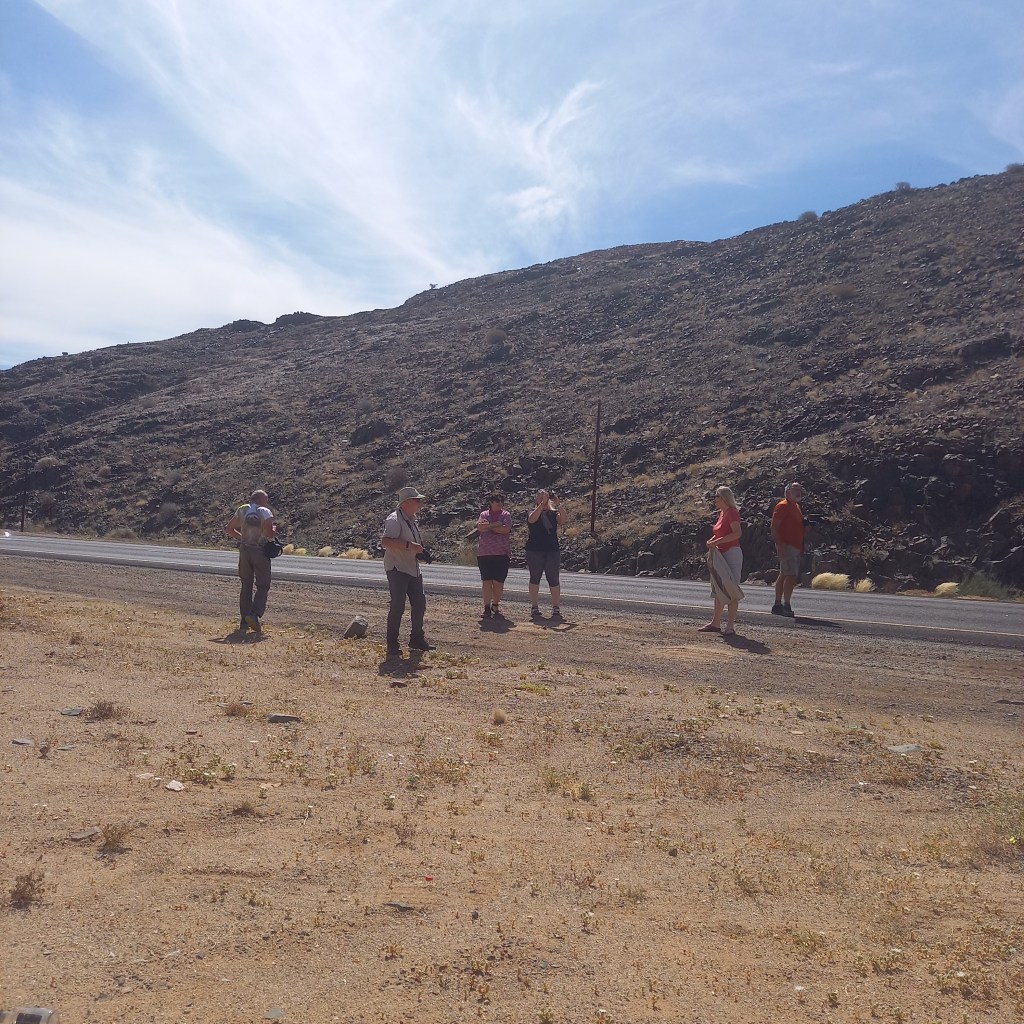
    We spent the day driving north, punctuated by loo breaks (bushie bushie) and a longer one for lunch.
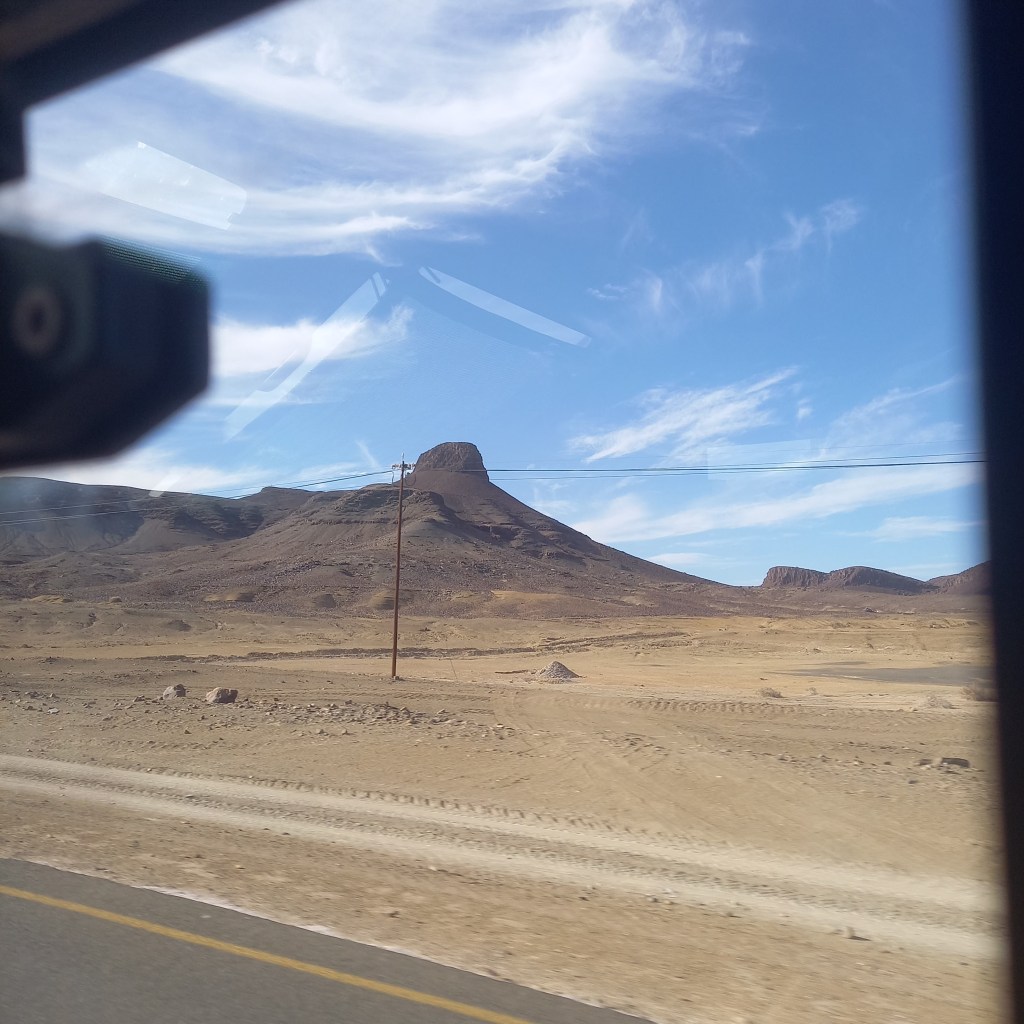
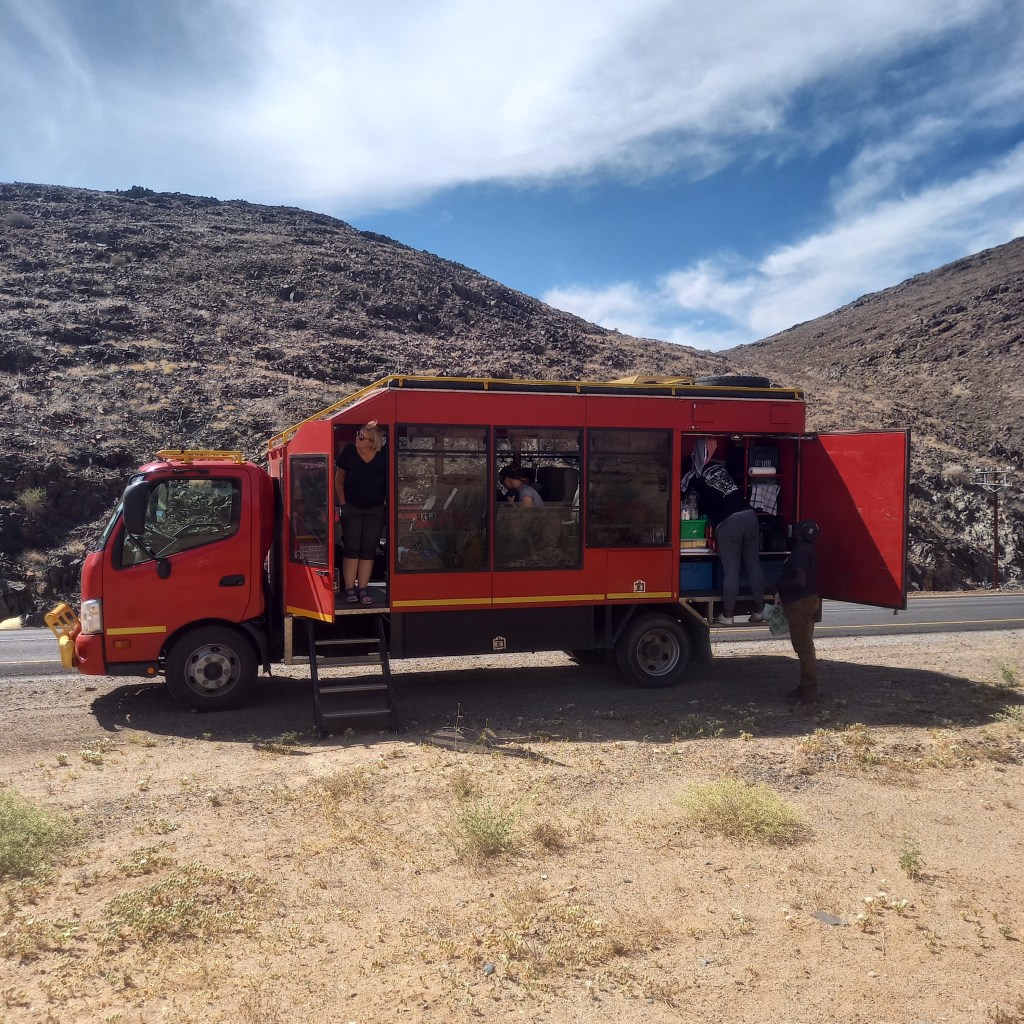
    Terrain becoming desert-like
    Stops along the way
    Stretching our legs

    One of these breaks was in Springbok- formerly famed for the amount of these beasts that inhabited the area before man came along and killed off so many of them. I was fascinated that the rugby team actually had a place. The Springbok is the emblem of South Africa.

    We were still in Northern Cape, the largest of the nine provinces in South Africa.

    We kept going until we got to the border to leave SA. We had to produce our passports to the police who stamped them and gave them back to us, thankfully.

    On a few miles and out again, this time to enter Namibia.

    We had to fill in forms individually and another stamp was applied to our passports.

    When I got back to the bus, I read my Irish passport for the first time ever. It is full of patriotic phrases and welcoming sentiments towards immigrating people. It has images of ancient and modern Ireland embossed on it that are very impressive.
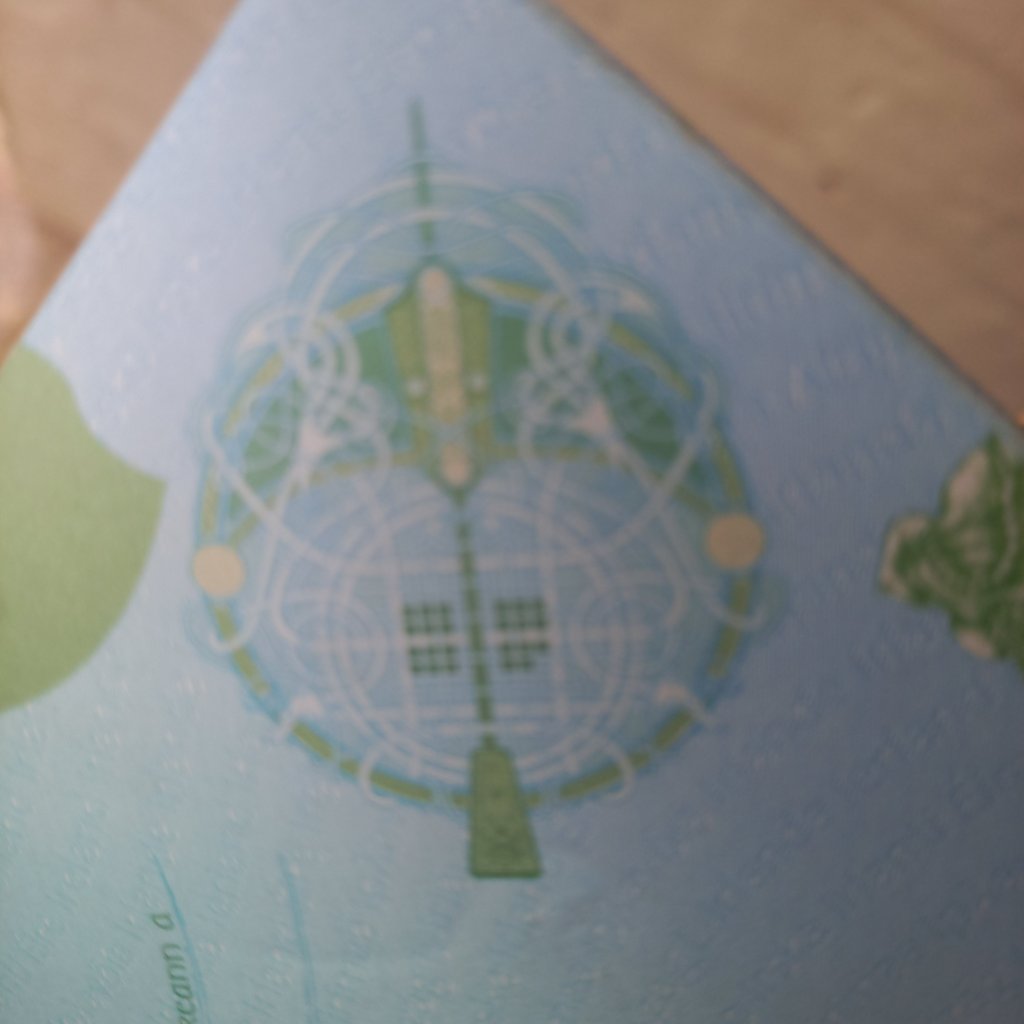
    ‘The harp that once through Tara’s Halls’

    We crossed the Orange River, now known by its original name, Gariep River,  and were officially in Namibia. It was formerly German South West Africa and gained independent statehood finally in 1990.

    Felix Unite, our accomodation for tonight was only a 10 minute drive.

    The chalets are set looking over the Orange river, as it swirls and eddies along. We can see where it had flooded, leaving reeds and grasses on the higher ground.

    There is a manicured lawn in front of our chalet with outside chairs and a table.

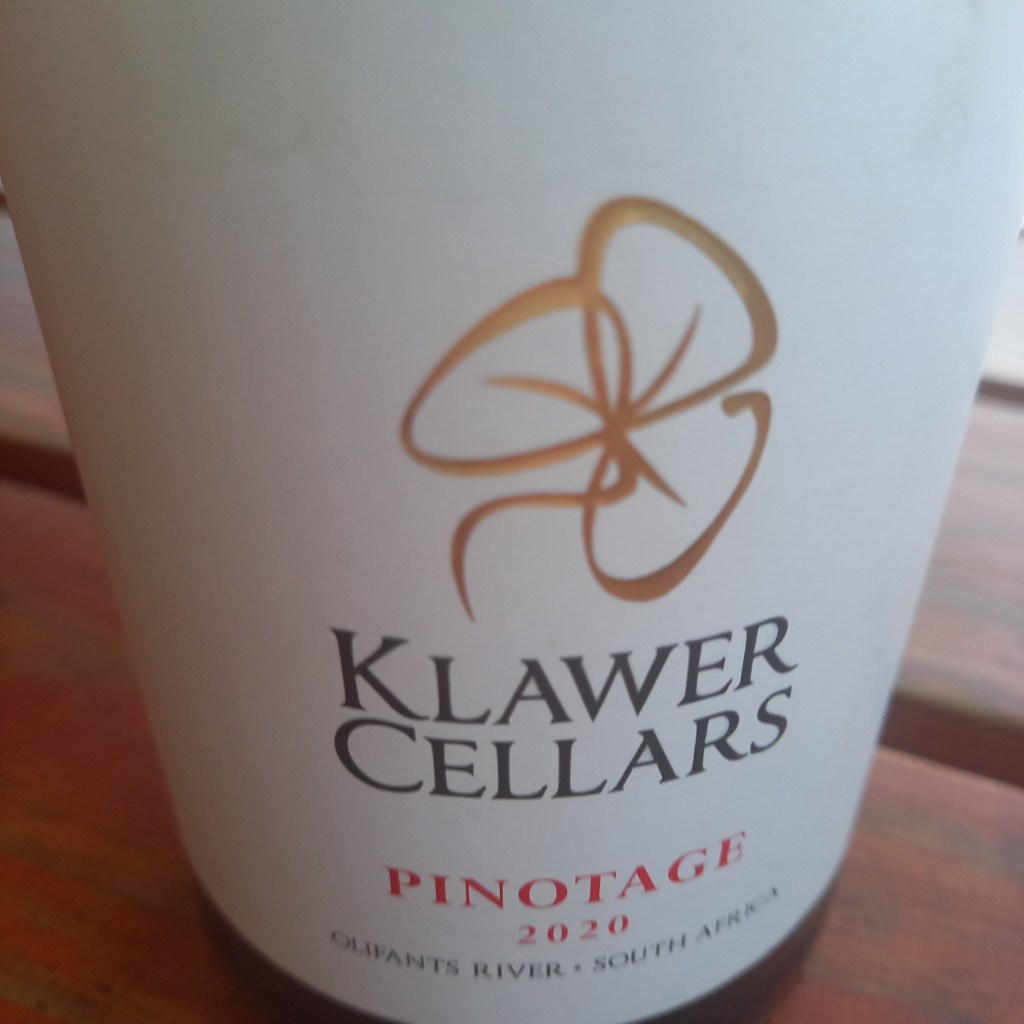
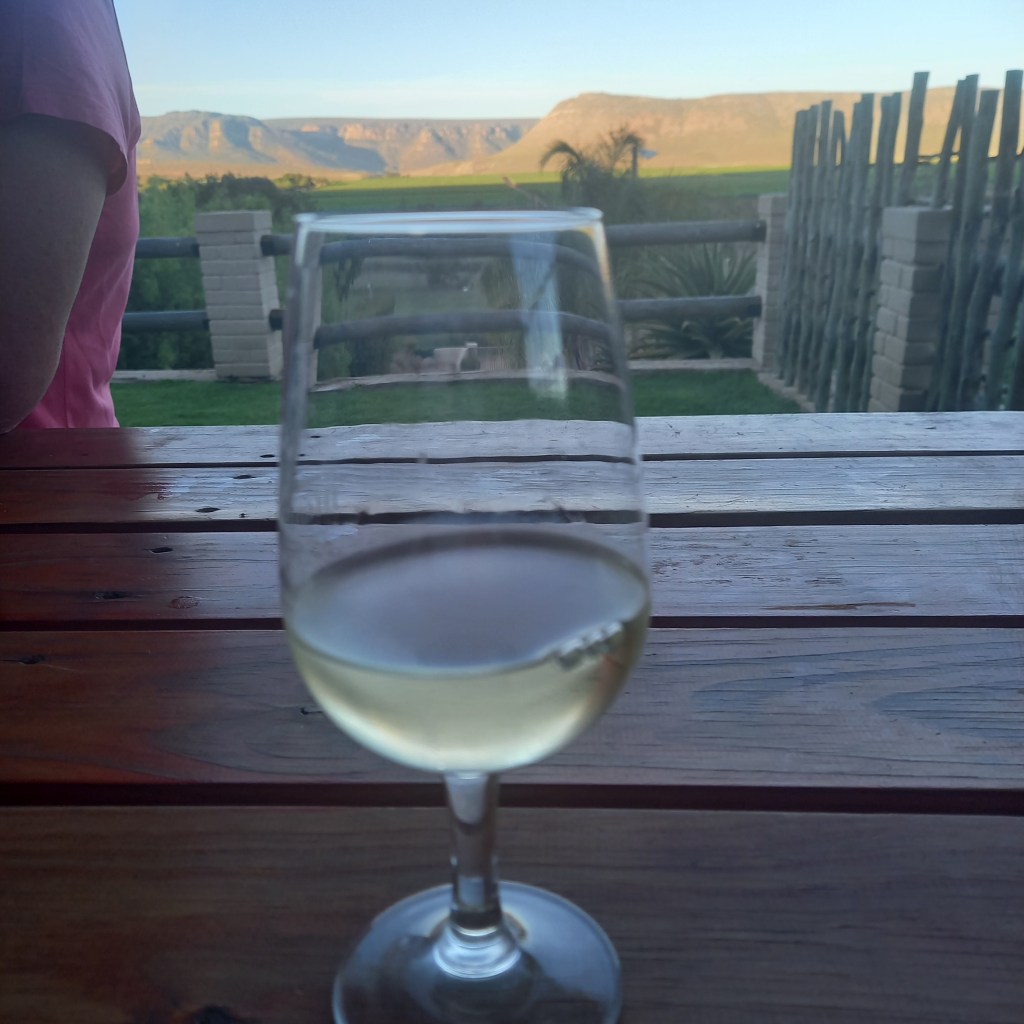
    At last a chance to break open the bottle of red from Robertson winery that I bought 2 days ago – or was it yesterday? – the days are melding into each other.

    Dinner will be at 1845 and river canoeing awaits us tomorrow.
  • Algeria, Cederberg Day 2

    Algeria, Cederberg Day 2

    A glorious buffet breakfast in the V and A got us off to a good start.

    As instructed, we placed our bags next to our tour lorry, to be loaded by Swise and we were off again.

    We soon learned that seating on the bus must rotate in a clockwise direction. Once that was organised , we set off.

    Our guides proved taciturn about the day ahead. We drove North out of Cape Town, stopping for shopping and Bushie bushie- loo stop- and we were advised to get enough booze and water to last three days. 

    I got a couple of six packs of the local Castle beer and a nice bottle of Robertson wine with five litres of water, portered out to the bus by an obliging attendant.

     We were to get enough Rands for Namibia too- SA rand being accepted there.

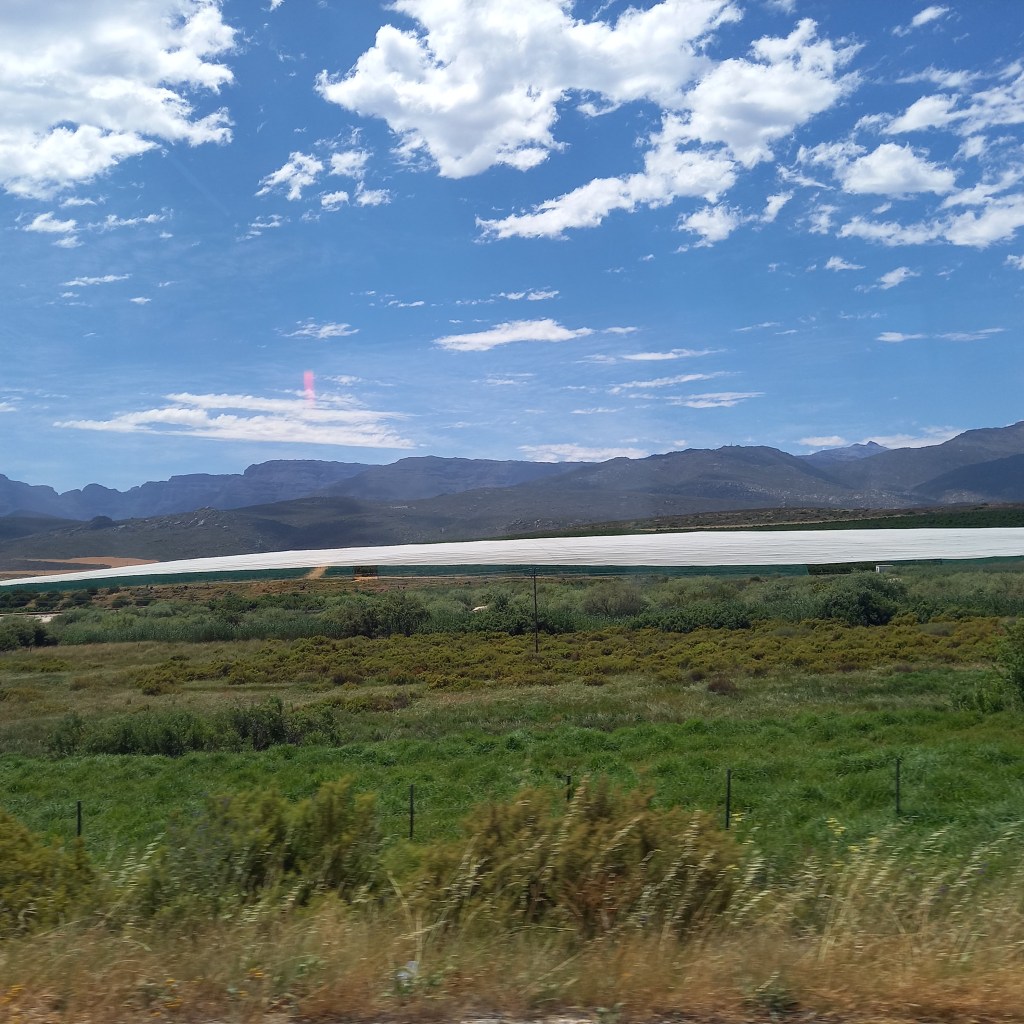
    We passed  through Citrusdal, so called because of the vast amounts of orange and lemon trees. The fields were covered with white sheets of netting that looked like water, to protect them from insects.

    White nets to keep flies off citrus trees driving north on the west coast of South Africa

     Soon, as we moved into the Cederberg mountains,we saw the Roobois tea plants, unique to this region, lining the roads.

    Eventually, we stopped at a lodge called Algeria, after the town of that name in the area.

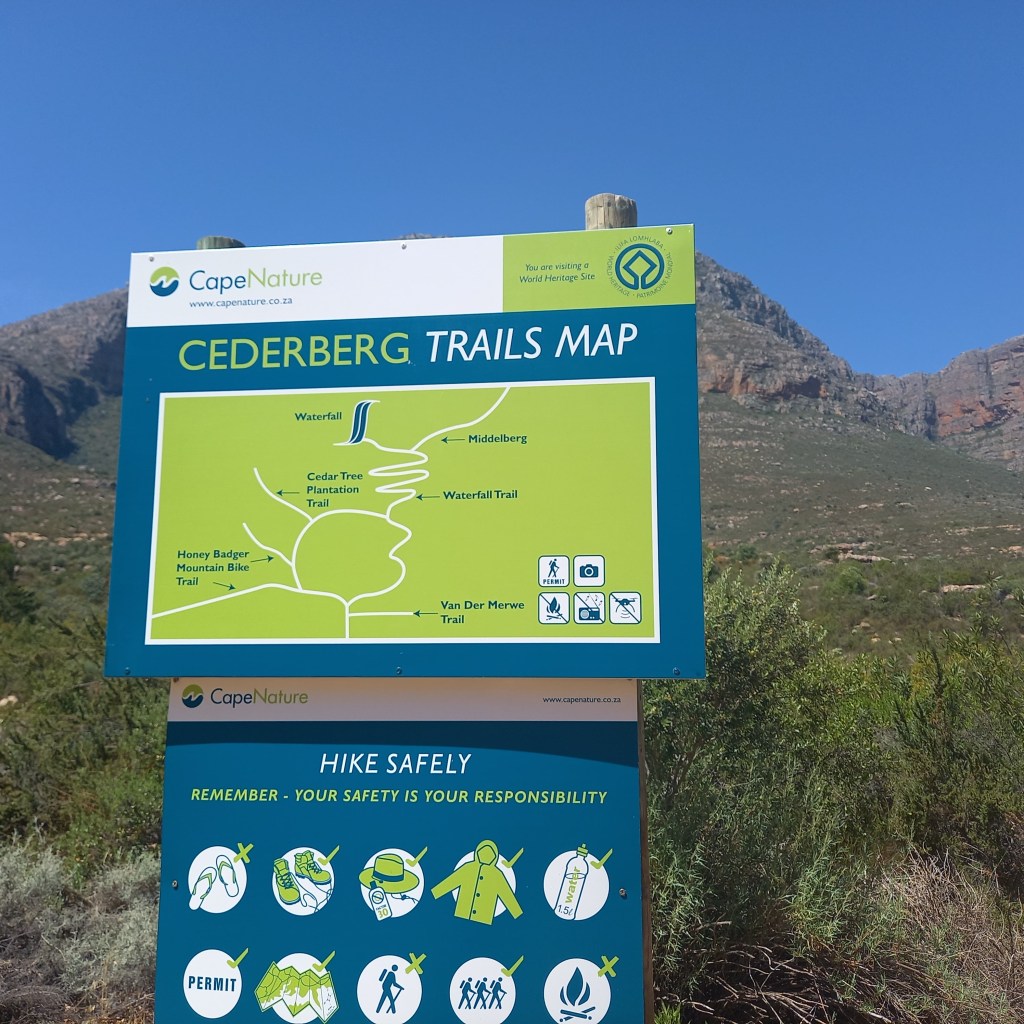
    We set up for lunch, then Swise dropped the bombshell that the hike that afternoon was a three hour one.

    We all opted to try it except for two German ladies.

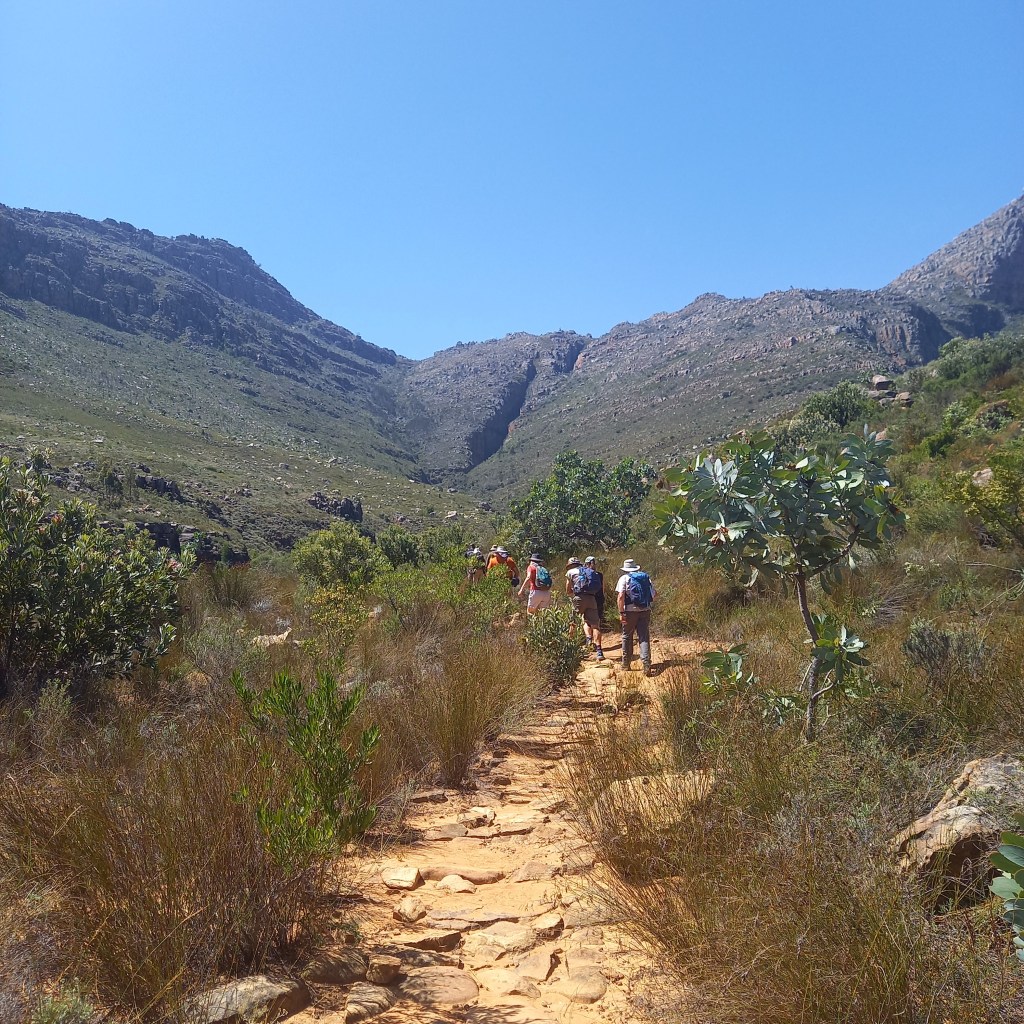
    It turned out to be a difficult hike in the hot sun, up rocky terrain with loose rocks making it more difficult. We got strung out along the trail and soon, four decided to go back to the camp, while the rest of us, about six, continued on with Tawanda. Swise had actually found it difficult himself and he took shelter from the sun in a rock like cave along the path. 

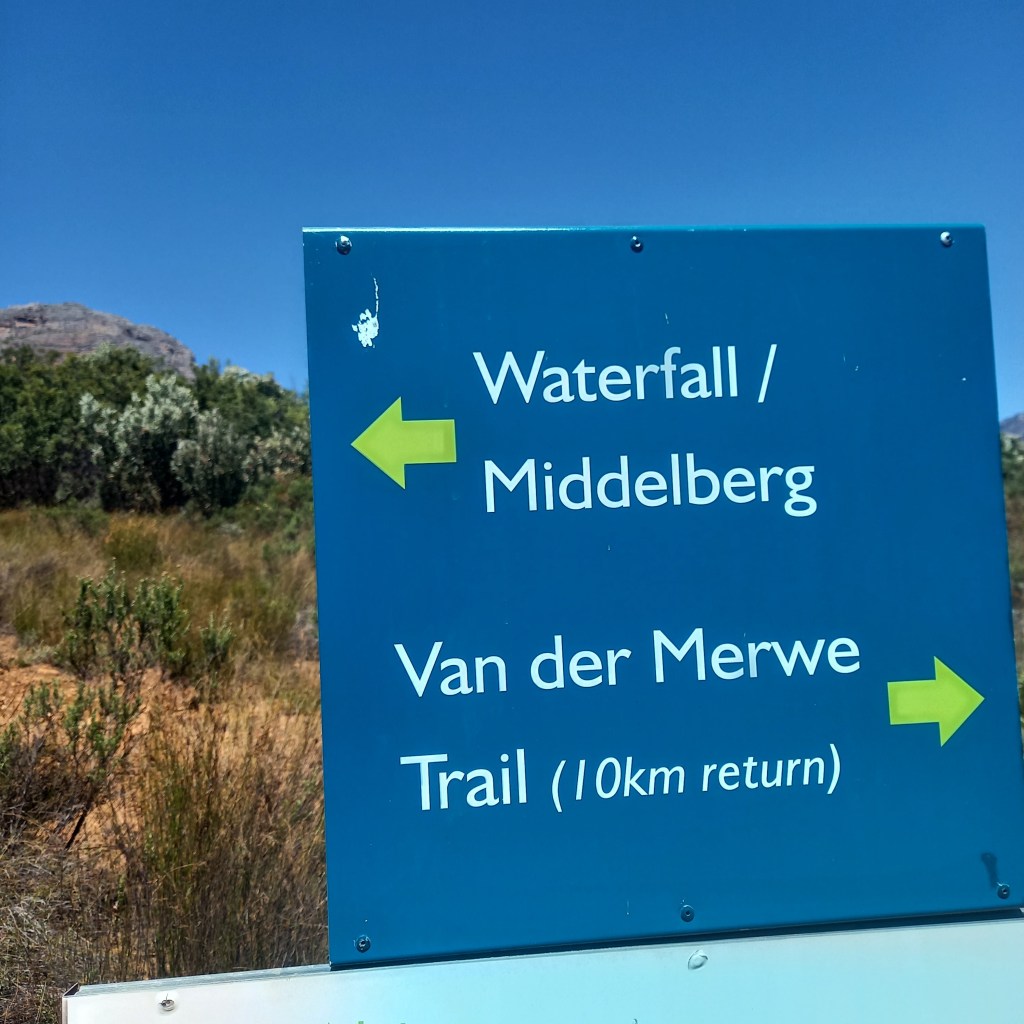
    We made it to the fork in the road where we could continue on up to the waterfall at the top of the mountain or take the circular route back to camp. We opted for the latter and from then on, it was downhill. Still tricky, as it is as easy to fall downhill as uphill.

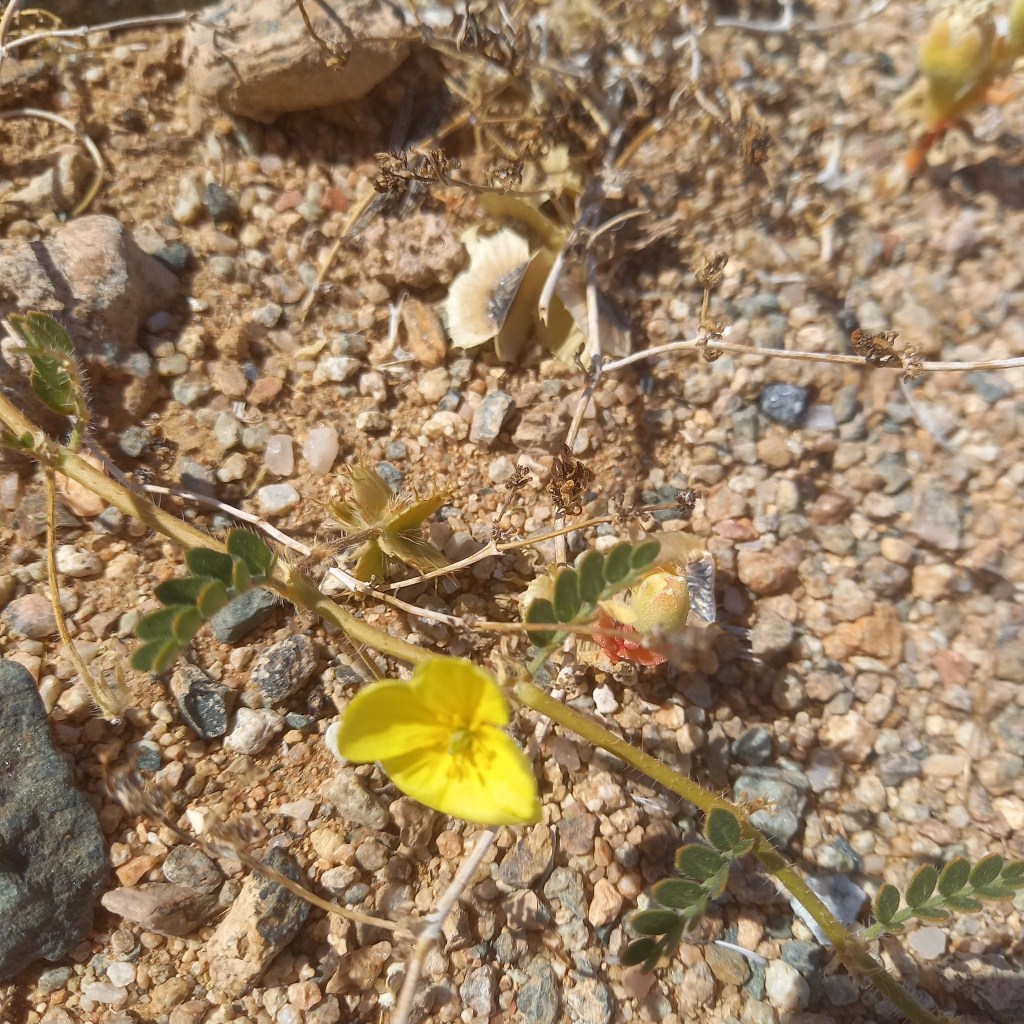
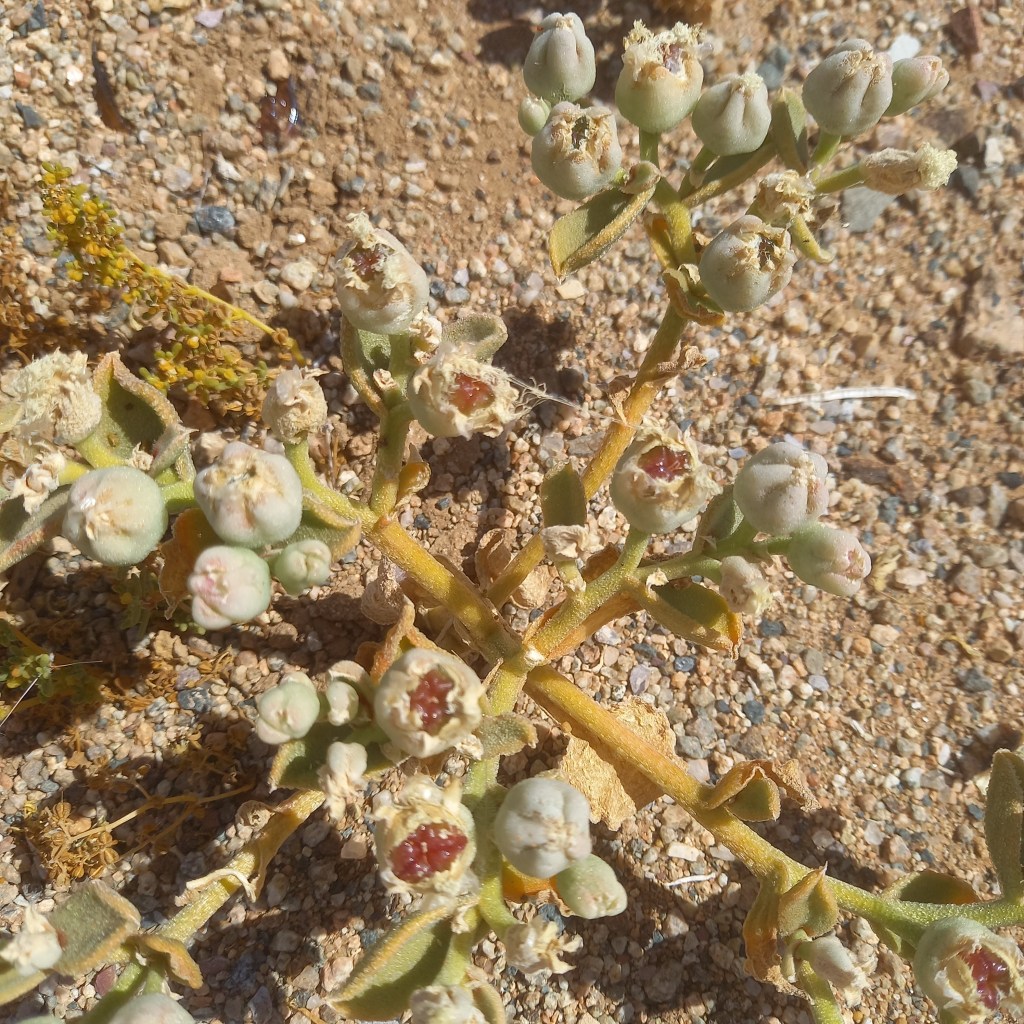
    Looking at the mountain from a distance, it seems to be all rocks with the occasional low bush or shrub. Once you are on it though, you see lots of colourful plants and trees. The Cape is known for its huge array of indigenous or endemic flowers and plants. 

    Back at camp, the group that had turned back were only just in before us. We still had an hour’s drive to our lodge for the night, Highlanders, further north, in the middle of a vine growing region.

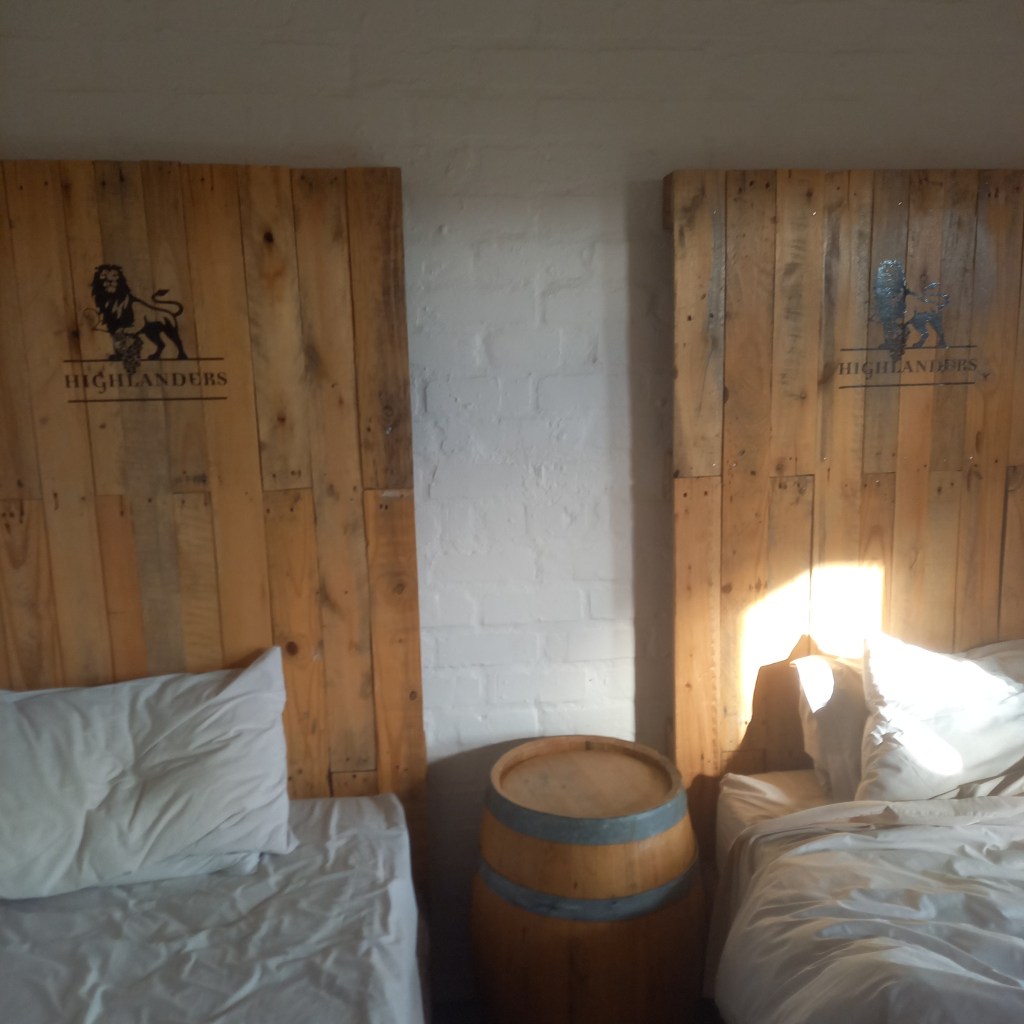
     We were greeted in  Highlanders by Raul who showed us our rooms. They were simple and decorated with old wine barrels for bedside tables and headrests for the beds out of cask boards. 

    The day wasn’t over yet! 

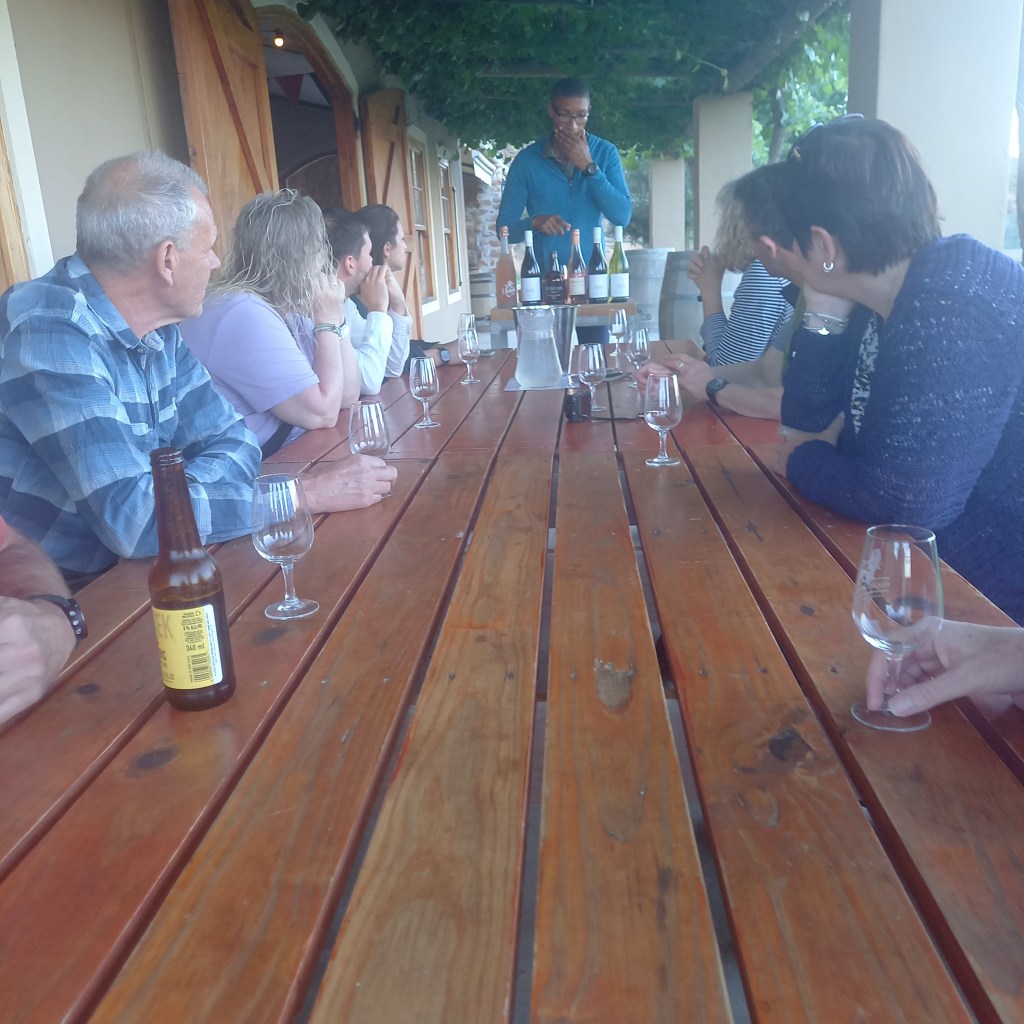
    Next ,we had a wine tasting with the aforementioned Raul, an Afrikaans/ English speaker who was a witty and charming host.

    Next was dinner by a wood fire, prepared by our guides . Chicken casserole with rice was very welcome after the day’s efforts and, of course, the wine. 

    I had to turn in early as I was totally exhausted. 

    A super night’s sleep followed in the comfort of our lovely chalet.

  • Day 1 – Cape of Good Hope, Penguins, Hout Bay

    Day 1 – Cape of Good Hope, Penguins, Hout Bay

    Penguin colony at Simonstown

    I was met at Cape Town airport by the taxi transfer I had booked in advance, and went straight to the Victoria and Albert City Lodge. It’s being renovated so there was noise of drilling, but I slept anyway after the long travel time.

    Next morning, we assembled after breakfast to sign indemnity papers etc and finally meet our travelling companions.

    Time to introduce the cast of characters.

    First of all, the guides. Swise, the driver is a 6’ tall descendant of the Zulu tribe, unruffled and calm, clearly used to dealing with a bunch of needy clueless tourists.

    Tawanda, a Zimbabwean, is shorter than his colleague, but makes up for it with his thickset build. He talked about smiles and he has the perfect example of a broad South African hospitable face, crowned by short dreadlocks. 

    The Group;

    a Welsh couple

    a couple of stout German damen

    a German couple on their second marriage in slightly later life

    a young German couple who are on their honeymoon

    a retired English accountant

    another retired English man

    a single German female

    Me

    I had already met some of the English speaking people and we quickly realised we were in a minority! My Leaving Cert  German would have to be dredged up from the inner recesses of what passes for my brain these days.

    Thankfully there were no towels on the seats of the bus and we set out for the southern part of the Cape. 

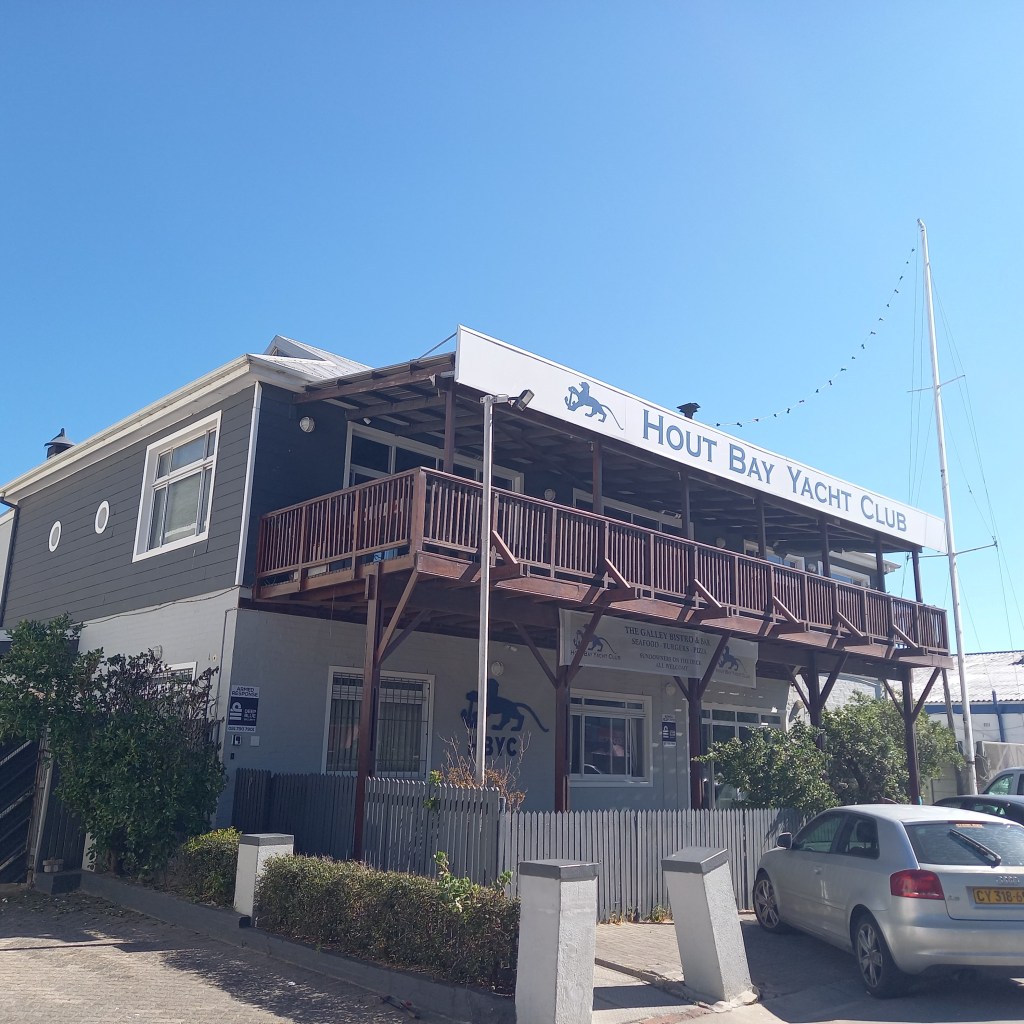
    First stop – Hout Bay – used by English ships as a safe harbour.

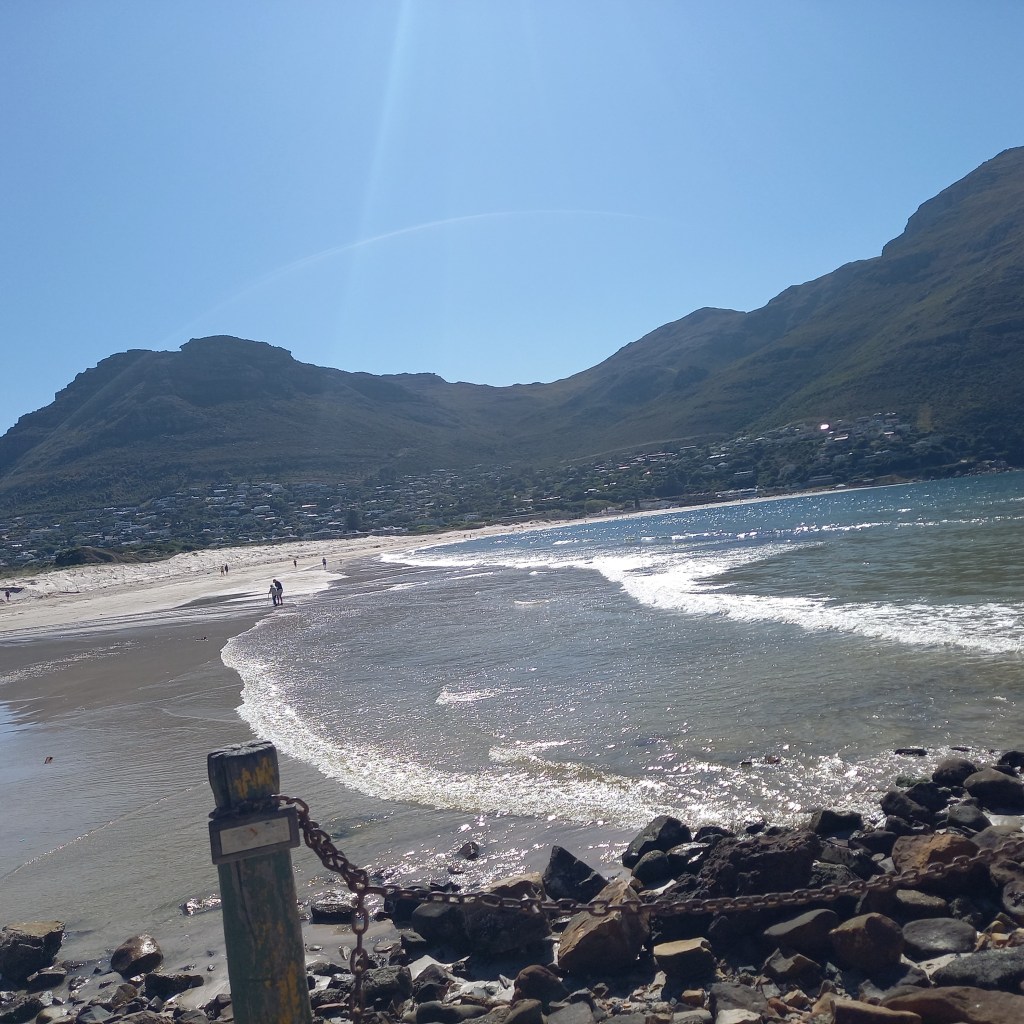
    Also important for the timber that used to surround the area until the settlers cut it down for house and ship building. Manganese was a large part of the trade here at one time. Now it’s mainly cray fishing and we saw the fishing boats in the harbour. There is a fabulous beach there and I took the opportunity to paddle. The whole area is dazzlingly beautiful.

    Hout Bay Yacht Club
    Hout Bay Beach

    As we drove out of Hout Bay, a shanty town was visible to our right. 

    Tawanda drew our attention to it, referring to the two sides of South Africa- the poverty beside enormous wealth.

    The coastline is dotted with lavish homes taking advantage of the stunning views over the sea.

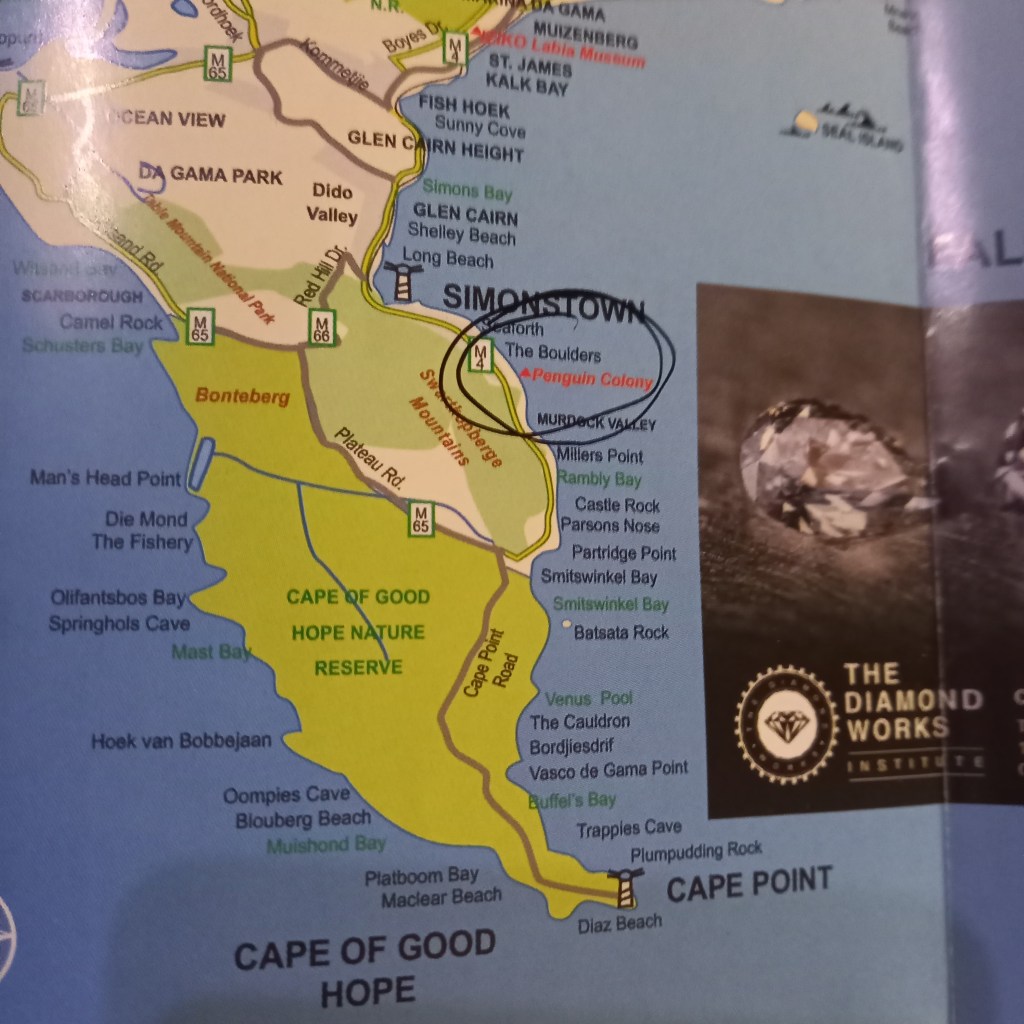
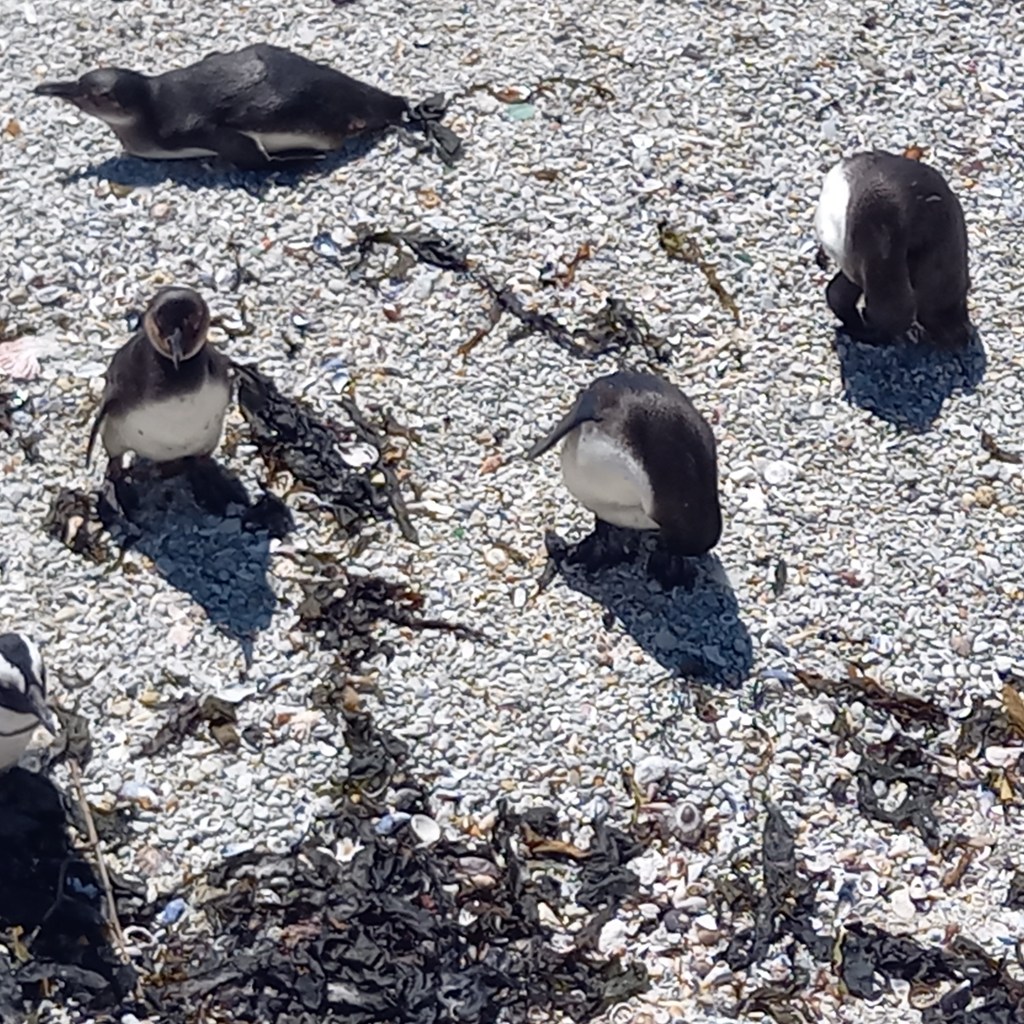
    Next to Simonstown to visit the colony of African penguins.

    This was cuteness overload. Wooden platforms have been built at either end of the beach to allow viewing, without disturbing these little guys.They have specially built little lairs in the undergrowth on land.

    African Penguins

    It’s unusual to have penguins in such warm areas. 

    Oh I do like to be by the seaside..

    They have adapted by cooling down via a gland above their eyes that allows them to release the heat of their bodies. They also have bare patches on their faces and hold their little flappers out from their bodies to cool down. They dive to cooler depths to lower their body temperature too, and despite all this, they are an endangered species. This is due to Man’s intervention and the depletion of guana piles that they use for breeding in. Most penguins breed on ice. These guys evolved only 2.4 million years ago, whereas their Antarctic counterparts are around for over 6 million years.

    The day was still young and we drove on to the Cape Reserve National Park.

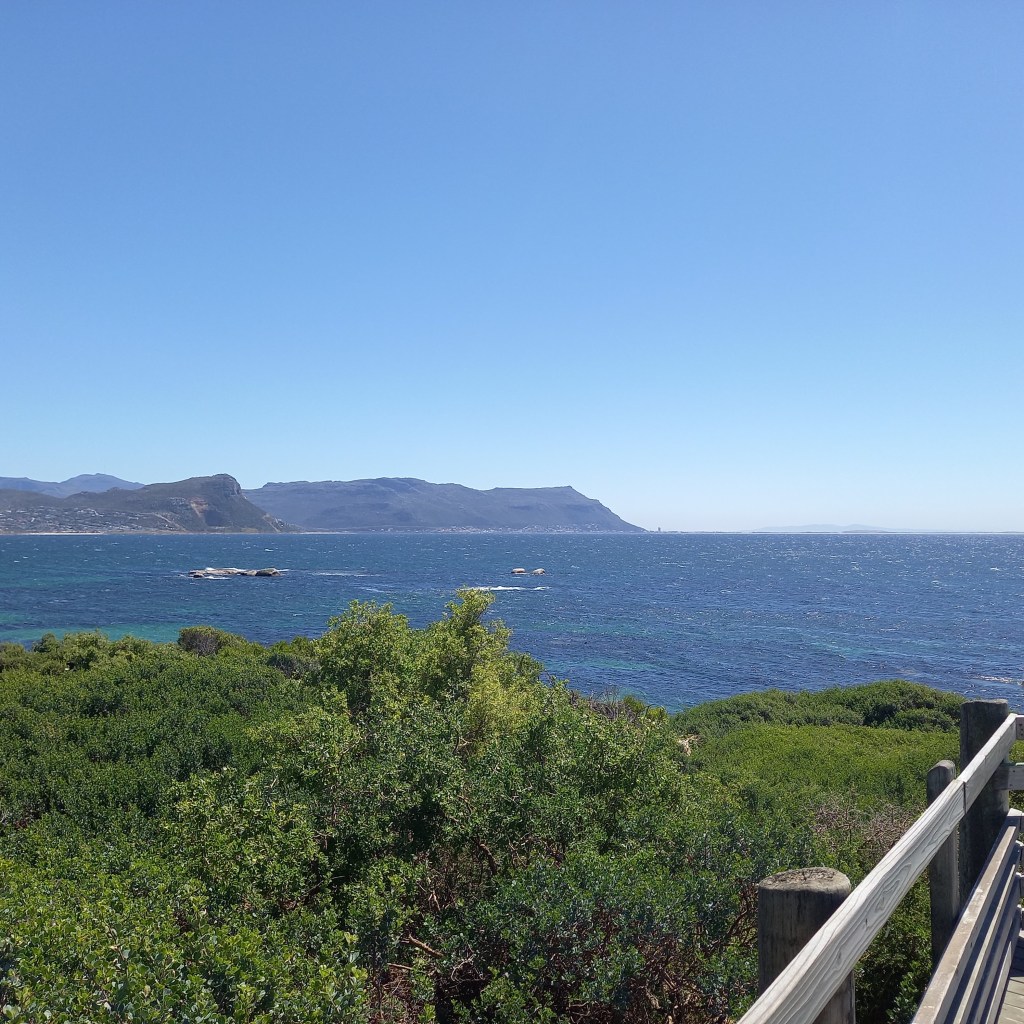
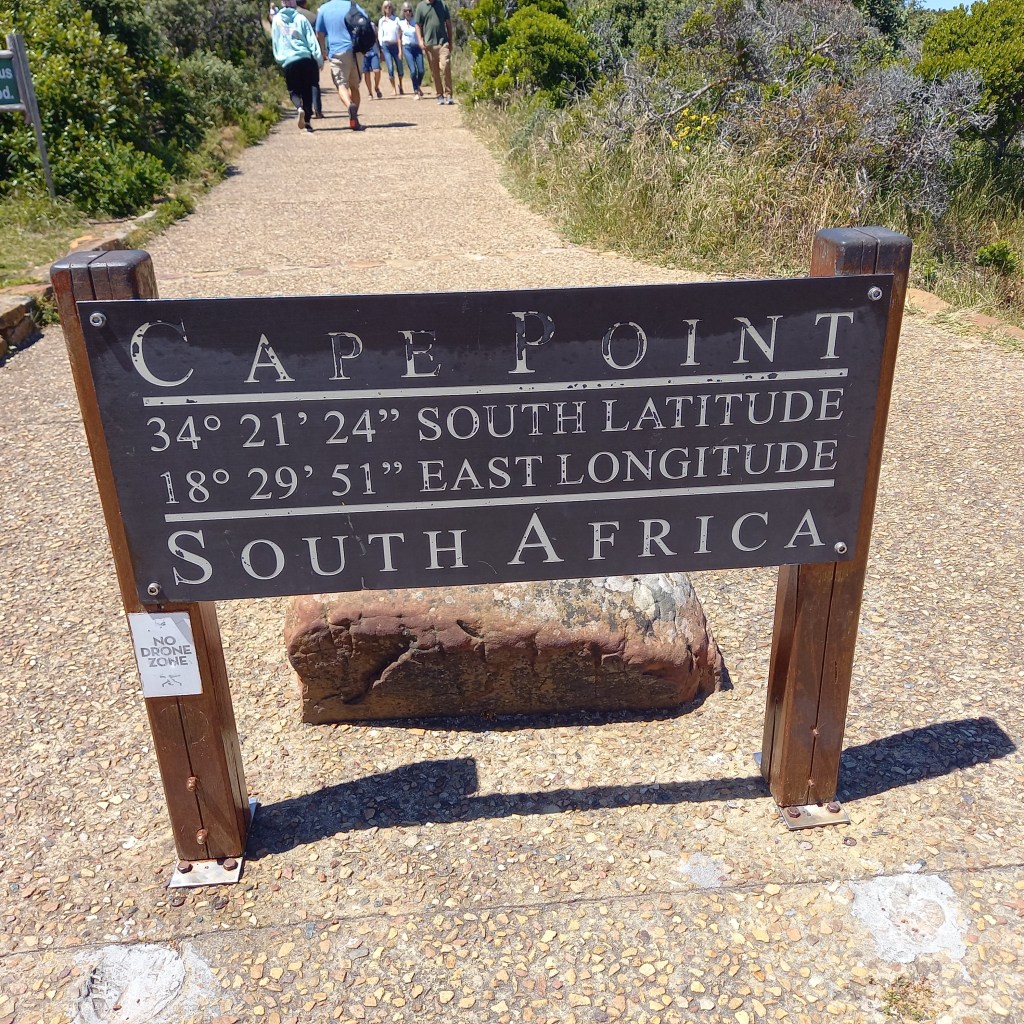
    There , we climbed to the summit of Cape Point and down again, grabbed takeaway lunch in the restaurant and tackled the 1.5 hour trek to the Cape of Good Hope.

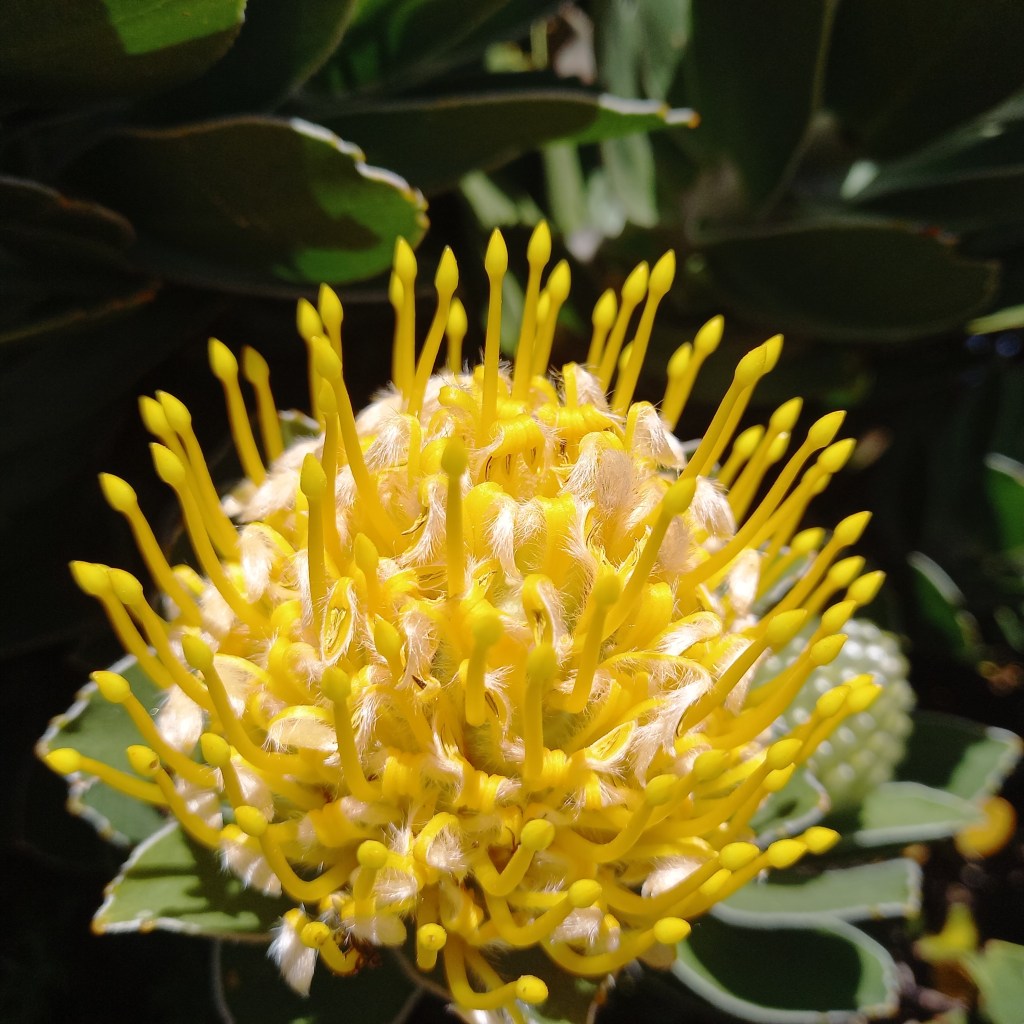
    Protea flower

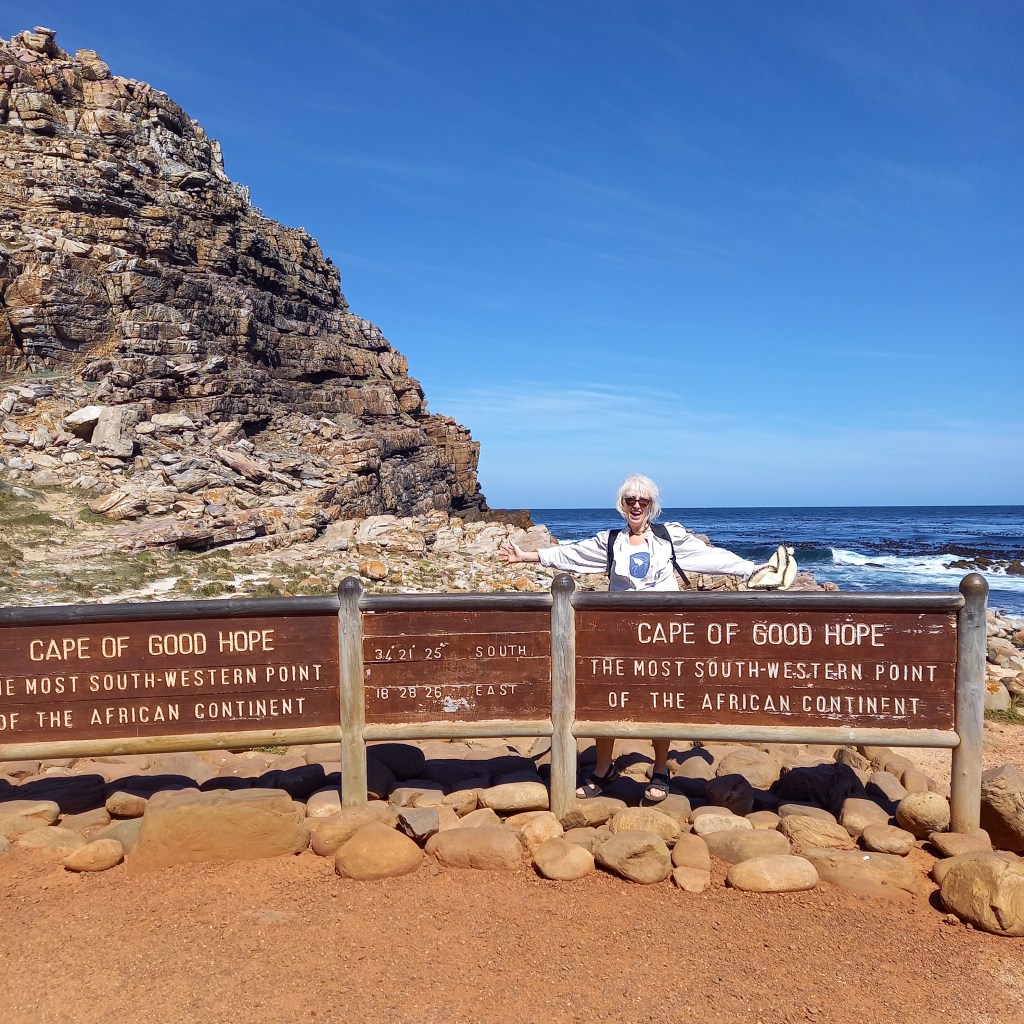
    I will let the photos tell their own story. It was breathtaking and quite emotional when I actually got my photo taken at the Cape of Good Hope.

    It is a landmark in global sea journeys. I thought about all the explorers who passed by and also those not so lucky who were shipwrecked there, helpless in the face of the wind in the wrong direction, with no engine, GPS or radio to assist them.

    We gladly boarded the bus, exhausted, and made our way back to the city. 

    Next came a flavour of the way our days were to become action packed.

    We were given 2 hours to prepare for dinner in a restaurant with a live African band.

    We got our first flavour of African fare- kudu, Springbok and ox tongue were among the choices. An accompaniment of african beans, millet and maize was annoption, which was really a meal in itself.

    The band was amazing, totally percussion, playing Dave Brubeck’s Take Five on a wooden xylophone with a band of wooden percussion behind him. Fantastic version.

    This is a taste of what they played earlier…

Is this your new site? Log in to activate admin features and dismiss this message
Log In